Search News
Industry Portal
Popular Tags
Digital Neurorehabilitation: What Improves Outcomes at Home?
Author
Time
Click Count
Why home recovery changes the digital neurorehabilitation equation
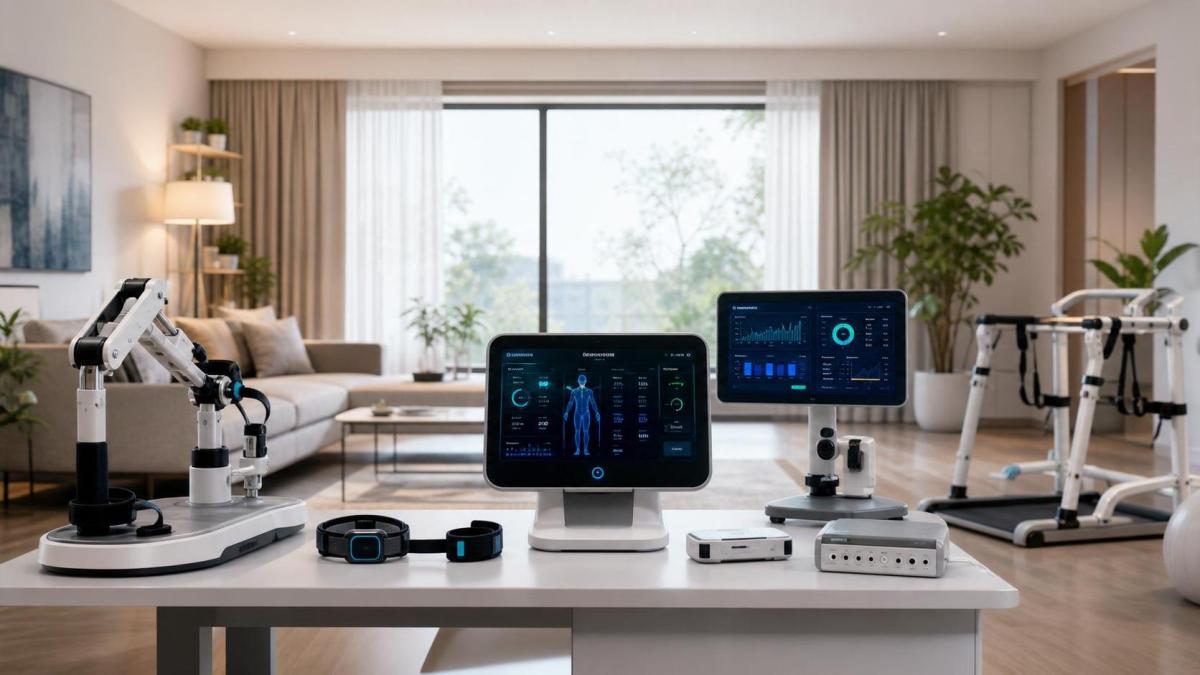
Digital neurorehabilitation matters most when therapy must continue beyond supervised sessions. Recovery does not pause after discharge, yet home environments rarely behave like rehabilitation labs.
That gap explains why some home programs produce steady gains, while others show high initial engagement and weak long-term outcomes. The issue is usually not one device alone.
What improves outcomes at home is a coordinated system. It combines guided exercises, reliable sensing, remote review, clear escalation rules, and realistic daily routines.
In digital neurorehabilitation, the home setting creates variable lighting, inconsistent connectivity, caregiver differences, and uneven motivation. Those factors shape results as much as therapy intensity.
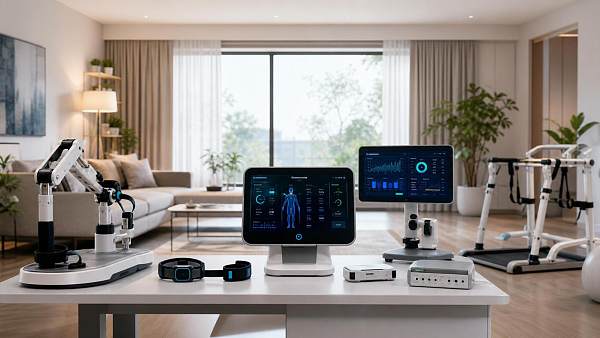
For healthcare technology analysis, this makes digital neurorehabilitation more than a software topic. It connects wearable data, telemedicine workflows, smart rehabilitation systems, and secure clinical reporting.
That broader view aligns with DMRS coverage of connected healthcare, medical AI, remote monitoring, and data-driven rehabilitation. Home performance depends on how those layers work together.
Actual use starts with different home scenarios
Digital neurorehabilitation is often discussed as one category, but home recovery needs vary sharply by condition, mobility level, cognitive load, and available support.
A post-stroke user practicing upper-limb reach tasks needs different feedback than a Parkinsonian user training gait rhythm. A traumatic brain injury case may need more cueing and supervision.
The more useful question is not whether digital neurorehabilitation works. It is which configuration works under which home conditions, and what should be monitored continuously.
When motor recovery is the main goal
Motor-focused digital neurorehabilitation usually performs better when exercise tasks are short, repeatable, and sensor-verified. At home, adherence drops quickly if tasks feel vague or repetitive.
Here, the judging point is not only range of motion. Session completion, movement quality, fatigue signals, and compensatory patterns all affect whether training remains clinically meaningful.
When cognition and communication shape participation
Some home programs fail because they assume motor ability is the only barrier. In practice, memory deficits, aphasia, or attention fluctuation can limit independent use.
In those cases, digital neurorehabilitation needs simpler interfaces, fewer task branches, audio or visual prompts, and easy clinician review of incomplete or irregular sessions.
High-frequency home applications do not prioritize the same metrics
A useful deployment decision usually compares home use cases directly. The table below shows why digital neurorehabilitation cannot be selected by headline features alone.
Across these scenarios, the strongest digital neurorehabilitation programs usually balance measurable training with enough flexibility to fit real household routines.
What tends to improve outcomes at home
In practice, better outcomes come from several small advantages working together. No single layer compensates for weak usability, missing oversight, or poor data quality.
- Objective tracking that captures actual movement, not only session duration.
- Therapy content that adjusts difficulty before frustration or fatigue builds.
- Remote clinician review that flags stalled progress early.
- Simple setup that works without extensive household troubleshooting.
- Feedback loops that connect home data to clinical decisions.
This is where digital neurorehabilitation overlaps with Software as a Medical Device, telehealth platforms, and remote patient monitoring systems covered across DMRS analysis.
If the platform cannot transmit usable data securely, or if clinicians cannot review it efficiently, home therapy becomes a disconnected activity instead of a managed recovery pathway.
Remote monitoring helps only when the data can change decisions
Many digital neurorehabilitation systems now include dashboards, wearables, and alerts. Those features matter only when they support an operational decision.
A useful alert may show declining gait symmetry over seven days. A weak alert simply announces that sessions occurred. One affects intervention timing; the other fills storage.
At home, trend data is often more valuable than isolated readings. Neuro recovery is variable, so outcome tracking must distinguish temporary fluctuation from meaningful decline or improvement.
This creates a practical requirement for digital neurorehabilitation platforms: data should be clinically readable, exportable, and compatible with wider hospital or outpatient documentation workflows.
Integration matters even more when digital hospital infrastructure, cloud records, and telemedicine systems are already in place. Otherwise, monitoring remains technically impressive but operationally isolated.
Where home programs are often misjudged
A common mistake is selecting digital neurorehabilitation by hardware specification alone. Sensor count, display size, or AI claims do not guarantee effective home use.
Another misjudgment is assuming similar neurological conditions create the same usage pattern. Two stroke cases may differ more by cognition, fatigue, and household support than by diagnosis code.
There is also a tendency to underestimate implementation friction. Home networks fail, wearables are charged inconsistently, and exercise spaces are often smaller than planned.
Digital neurorehabilitation can underperform when escalation pathways are unclear. If pain, dizziness, or falling adherence appears, the next step must be predefined.
Data governance is another overlooked point. Once therapy data, video, and biometric signals move across devices and cloud systems, privacy, retention, and access control become part of outcome quality.
A practical way to match digital neurorehabilitation to real conditions
A better matching process starts with the home reality, not the product sheet. The first step is to map therapy goals against supervision level, mobility risk, and digital literacy.
Next, confirm whether the digital neurorehabilitation system measures the variables that actually matter for that recovery phase. Early-stage goals differ from maintenance goals.
Then review implementation conditions:
- How much setup can be completed without on-site technical support?
- Which data points trigger clinical follow-up?
- Can progress reports fit existing rehabilitation documentation?
- What happens when adherence falls for two consecutive weeks?
- Which privacy and compliance rules apply across devices and storage?
This kind of review is more reliable than comparing marketing claims. It also fits the DMRS approach of connecting clinical value, software compliance, connected devices, and workflow practicality.
What should happen next before scaling home rehabilitation
Digital neurorehabilitation improves outcomes at home when the system reflects actual living conditions, not idealized therapy conditions. Better sensing helps, but only when paired with usable workflows.
The most dependable next step is to define several real home scenarios, compare the monitoring and therapy requirements of each, and set decision rules for adjustment.
It also helps to verify data quality, review implementation burden, and check how home-generated information will support clinical interpretation over time.
When digital neurorehabilitation is judged through that lens, outcome improvement becomes easier to explain, measure, and sustain across the wider connected healthcare landscape.
Recommended News
 Sep 08, 2026When does EEG BCI rehabilitation improve motor recovery training?EEG BCI rehabilitation can enhance motor recovery when patient intent triggers meaningful feedback. Explore eligibility, workflow, outcomes, safety, and scalable clinical implementation.
 Sep 04, 2026How to evaluate smart healing recovery systems for rehab programsSmart healing recovery systems: learn how to evaluate clinical value, safety, integration, data reliability, and scalability for more effective rehab programs.
 Aug 31, 2026What clinical factors determine whether BCI rehabilitation systems fit a stroke program?BCI rehabilitation systems: explore the clinical factors that shape stroke program fit, from patient selection and signal reliability to safety, workflow, and functional goals.
 Jul 14, 2026Brain-Computer Interface Training: Key Factors That Shape Rehab ResultsBrain-computer interface training works best when signal quality, patient engagement, protocol design, feedback, and data tracking align. Discover the key factors that improve rehab results.
 Jul 11, 2026Brain-Computer Interface Technology in Rehab: What Works TodayBrain-computer interface technology in rehab: discover what works today for stroke recovery, neurofeedback, robotics, and measurable patient progress in real clinical settings.
 Jul 05, 2026EEG Brain Computer Interface: Key Signals That Define Rehab PerformanceEEG brain computer interface insights for rehab: discover which signals best predict motor intent, engagement, and recovery progress to compare systems with more confidence.
 Jun 30, 2026Neurorehabilitation Cost Breakdown: Therapy, Devices, and Long-Term ValueNeurorehabilitation cost explained: compare therapy, devices, software, and long-term value to avoid hidden expenses and make smarter rehab investment decisions.
 Jun 28, 2026Digital Neurorehabilitation: What Improves Outcomes at Home?Digital neurorehabilitation improves home recovery when guided exercises, smart monitoring, and clinician review work together. Learn what truly boosts outcomes and supports safer, more effective therapy at home.
 Jun 26, 2026Brain Computer Interface System: What to Evaluate FirstBrain computer interface system selection starts with signal quality, use-case fit, integration, compliance, and scalability—learn what to evaluate first for smarter healthcare decisions.
 Jun 24, 2026EEG BCI Rehabilitation: Best Use Cases for Motor RecoveryEEG BCI rehabilitation unlocks smarter motor recovery with top use cases in stroke care, early neurorehabilitation, robotic therapy, and hybrid home programs.
 Jun 19, 2026Fourier Enters Malaysia Rehab ProjectFourier Enters Malaysia Rehab Project as a national-level smart rehabilitation solution for PERKESO, signaling a new path for Chinese BCI rehab systems in sovereign procurement.
 Jun 18, 2026CMEF Spotlight Shifts to Certified AI Rehab SupplyCMEF Spotlight Shifts to Certified AI Rehab Supply: discover how FDA 510(k), CE MDR, and remote monitoring compliance are reshaping global sourcing, buyer screening, and export opportunities.
 Jun 13, 2026Brain-Computer Interface Wheelchair Control: Key Safety LimitsBrain-computer interface wheelchair control explained through key safety limits, signal reliability, fail-safe design, and validation priorities for safer clinical deployment.
 Jun 12, 2026Intelligent Rehabilitation Equipment: Which Features Improve Outcomes?Intelligent rehabilitation equipment improves outcomes with real-time tracking, adaptive support, safety controls, and actionable data. Discover which features deliver measurable recovery results.
 Jun 11, 2026NeuroXess Cuts BCI Rehab Lead Time to 8 WeeksNeuroXess cuts BCI Rehab lead time to 8 weeks as its Zhengzhou line enters mass production, backed by ISO 13485:2025 and IEC 62304 Class C—see why this matters for MDR transition orders.
 Jun 11, 2026Rehabilitation Robotics Cost Breakdown: What Drives Budget Up or Down?Rehabilitation robotics cost explained: discover the key drivers behind pricing, hidden ownership expenses, and smart ways to compare systems before approving your budget.
 May 28, 2026What makes brain-computer interfaces harder to scale across clinicsBrain-computer interfaces are harder to scale across clinics due to workflow, training, IT, reimbursement, and regulatory barriers. Discover what drives sustainable adoption.
 May 28, 2026Why brain-computer interfaces in rehab still face slow adoptionBrain-computer interfaces in rehab promise real gains, but slow adoption stems from workflow, validation, ROI, and compliance hurdles. Explore what buyers must verify before scaling.