Search News
Industry Portal
Popular Tags
Brain-Computer Interface Wheelchair Control: Key Safety Limits
Author
Time
Click Count
Brain-Computer Interface Wheelchair Control: Key Safety Limits
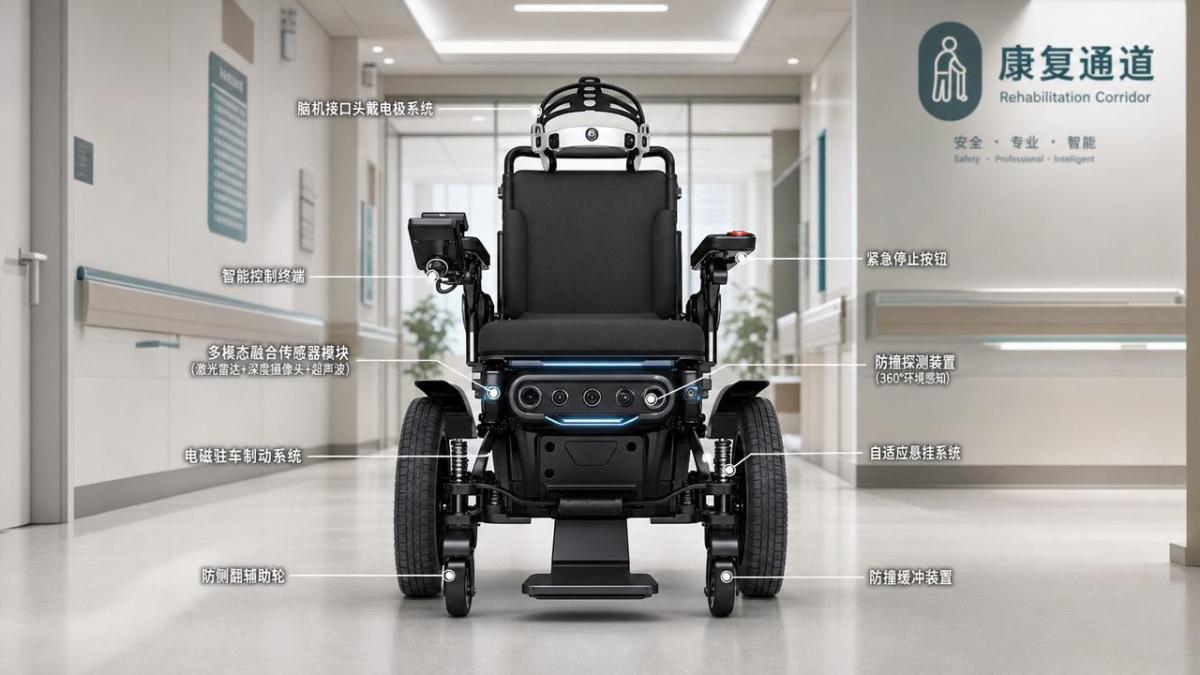
As brain-computer interface wheelchair control enters clinical pathways, safety limits move to the center of evaluation.
The concept is powerful.
A user generates brain signals, the system translates intent, and the wheelchair responds.
But real safety depends on what happens when signals are weak, delayed, noisy, or misread.
That is where quality boundaries matter most.
For brain-computer interface wheelchair control, the core question is not only whether movement is possible.
It is whether movement stays predictable under fatigue, interference, user stress, and device variation.
This also means safety review must cover the full chain.
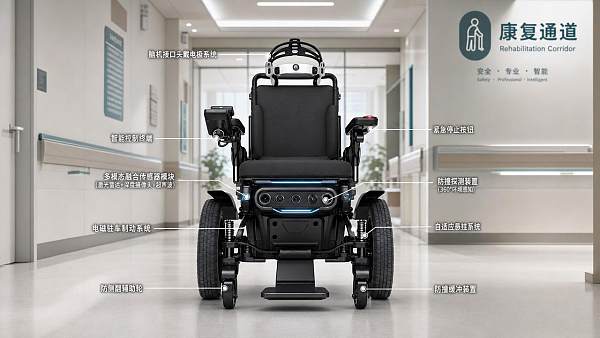
Electrodes, signal acquisition, decoding software, drive control, braking logic, alarms, and human override all interact.
If one layer fails silently, the wheelchair may still move when it should stop.
That is the practical safety limit many teams now focus on.
Why brain-computer interface wheelchair control has unique safety exposure
Traditional wheelchair control usually relies on a joystick, sip-and-puff input, or caregiver commands.
In those systems, intent is easier to confirm.
With brain-computer interface wheelchair control, intent is inferred from patterns, not directly observed.
That creates a different risk profile.
A harmless classification error in a screen interface may become a movement hazard in a powered wheelchair.
From a control perspective, five exposure points appear repeatedly:
- Unintended motion caused by false command detection
- Missed stopping intent during fatigue or distraction
- Latency between detected intent and actual wheelchair response
- Signal drift across sessions, environments, or electrode positions
- Reduced user control in crowded, sloped, or narrow spaces
These limits are not theoretical.
They directly affect hallway navigation, doorway turning, ramp use, bedside movement, and clinic transport.
In practical deployment, safety is less about peak lab accuracy and more about controlled behavior during imperfect conditions.
The first hard limit: signal quality and command reliability
The first safety ceiling in brain-computer interface wheelchair control is signal trustworthiness.
If the input signal is unstable, every downstream decision becomes less reliable.
EEG-based systems face common disturbances.
Muscle activity, head movement, poor skin contact, sweat, environmental noise, and electrode displacement can alter classification output.
The result may be a false forward command, delayed stop, or repeated command jitter.
Quality teams should therefore ask more specific questions than overall accuracy alone.
- What is the false activation rate per hour?
- How often is stop intent missed?
- How does accuracy change after prolonged use?
- What happens when electrodes shift slightly?
- How does the model perform with different patient profiles?
This is a key point.
Brain-computer interface wheelchair control should never depend on ideal calibration alone.
It needs conservative thresholds, confidence scoring, and command confirmation logic where appropriate.
In higher-risk settings, no-motion should be the default state when signal confidence falls below the acceptance window.
The second hard limit: latency, braking, and fail-safe behavior
Even accurate decoding becomes unsafe if the wheelchair reacts too slowly.
Latency in brain-computer interface wheelchair control accumulates across several stages.
Signal capture, filtering, classification, software communication, motor control, and mechanical braking all add delay.
In a wide room, a short delay may seem manageable.
Near stairs, beds, glass walls, or people, the same delay can become unacceptable.
That is why stopping performance should be measured as rigorously as movement performance.
A safe design normally includes these fail-safe layers:
- Automatic stop when signal confidence drops sharply
- Speed limits linked to environment or mode
- Emergency physical stop accessible to caregiver or staff
- Timeout logic when no stable command is detected
- Obstacle detection or collision mitigation where feasible
More importantly, fail-safe means fail-to-stop, not fail-to-continue.
If wireless links break, software freezes, or classification confidence collapses, the wheelchair should enter a controlled safe state.
That safe state must be validated, not assumed.
What standards and validation teams should actually examine
For brain-computer interface wheelchair control, compliance review usually crosses several domains.
Medical electrical safety, software lifecycle controls, usability engineering, and risk management all apply.
Depending on product architecture, teams often map requirements to standards such as IEC 60601, IEC 62304, ISO 14971, and IEC 62366.
If cloud functions, remote updates, or connected monitoring are included, cybersecurity review becomes equally important.
Still, standards alone do not answer operational safety.
Validation should reflect how brain-computer interface wheelchair control is really used.
A strong validation file should also define acceptance limits in measurable terms.
For example, maximum tolerated response delay, minimum stop accuracy, and acceptable false command frequency.
Without those limits, risk review stays too general to support release decisions.
Common deployment mistakes that weaken safety control
From recent market development, several mistakes appear again and again.
None of them look dramatic early on.
But together they can undermine brain-computer interface wheelchair control reliability.
- Using lab accuracy as a proxy for clinical safety
- Ignoring user fatigue during long sessions
- Testing only open spaces, not crowded interiors
- Treating recalibration as routine instead of risk relevant
- Missing clear logs for near-miss events and overrides
- Relying on one stopping mechanism without redundancy
A more realistic control strategy starts with use-case segmentation.
Not every environment deserves the same operating mode.
A rehabilitation corridor, hospital room, outdoor ramp, and home kitchen present different hazards.
This means brain-computer interface wheelchair control should often use context-based restrictions.
Lower speed, restricted turning, or assisted mode may be safer than full freedom in early deployment.
How to set practical safety limits before procurement or release
A useful safety framework for brain-computer interface wheelchair control should be simple enough to enforce.
It should also be strict enough to block risky deployment.
In practical business review, these checkpoints work well:
- Define intended environments and exclude unsupported ones
- Set measurable limits for false commands and stop latency
- Require fail-safe proof under signal loss and software error
- Verify user training, caregiver override, and alarm clarity
- Review logs from edge cases, not only successful runs
- Confirm post-update performance stays within validated limits
The stronger signal in the market is clear.
Brain-computer interface wheelchair control is moving from novelty to controlled clinical application.
That shift raises the standard for evidence.
Claims about innovation now need support from risk controls, documented limits, and repeatable validation.
In the end, safe mobility is not created by decoding intent alone.
It comes from knowing exactly where brain-computer interface wheelchair control should slow down, stop, or refuse to act.
That is the boundary that turns advanced control into a credible, deployable healthcare technology.
Recommended News
 Sep 08, 2026When does EEG BCI rehabilitation improve motor recovery training?EEG BCI rehabilitation can enhance motor recovery when patient intent triggers meaningful feedback. Explore eligibility, workflow, outcomes, safety, and scalable clinical implementation.
 Sep 04, 2026How to evaluate smart healing recovery systems for rehab programsSmart healing recovery systems: learn how to evaluate clinical value, safety, integration, data reliability, and scalability for more effective rehab programs.
 Aug 31, 2026What clinical factors determine whether BCI rehabilitation systems fit a stroke program?BCI rehabilitation systems: explore the clinical factors that shape stroke program fit, from patient selection and signal reliability to safety, workflow, and functional goals.
 Jul 14, 2026Brain-Computer Interface Training: Key Factors That Shape Rehab ResultsBrain-computer interface training works best when signal quality, patient engagement, protocol design, feedback, and data tracking align. Discover the key factors that improve rehab results.
 Jul 11, 2026Brain-Computer Interface Technology in Rehab: What Works TodayBrain-computer interface technology in rehab: discover what works today for stroke recovery, neurofeedback, robotics, and measurable patient progress in real clinical settings.
 Jul 05, 2026EEG Brain Computer Interface: Key Signals That Define Rehab PerformanceEEG brain computer interface insights for rehab: discover which signals best predict motor intent, engagement, and recovery progress to compare systems with more confidence.
 Jun 30, 2026Neurorehabilitation Cost Breakdown: Therapy, Devices, and Long-Term ValueNeurorehabilitation cost explained: compare therapy, devices, software, and long-term value to avoid hidden expenses and make smarter rehab investment decisions.
 Jun 28, 2026Digital Neurorehabilitation: What Improves Outcomes at Home?Digital neurorehabilitation improves home recovery when guided exercises, smart monitoring, and clinician review work together. Learn what truly boosts outcomes and supports safer, more effective therapy at home.
 Jun 26, 2026Brain Computer Interface System: What to Evaluate FirstBrain computer interface system selection starts with signal quality, use-case fit, integration, compliance, and scalability—learn what to evaluate first for smarter healthcare decisions.
 Jun 24, 2026EEG BCI Rehabilitation: Best Use Cases for Motor RecoveryEEG BCI rehabilitation unlocks smarter motor recovery with top use cases in stroke care, early neurorehabilitation, robotic therapy, and hybrid home programs.
 Jun 19, 2026Fourier Enters Malaysia Rehab ProjectFourier Enters Malaysia Rehab Project as a national-level smart rehabilitation solution for PERKESO, signaling a new path for Chinese BCI rehab systems in sovereign procurement.
 Jun 18, 2026CMEF Spotlight Shifts to Certified AI Rehab SupplyCMEF Spotlight Shifts to Certified AI Rehab Supply: discover how FDA 510(k), CE MDR, and remote monitoring compliance are reshaping global sourcing, buyer screening, and export opportunities.
 Jun 13, 2026Brain-Computer Interface Wheelchair Control: Key Safety LimitsBrain-computer interface wheelchair control explained through key safety limits, signal reliability, fail-safe design, and validation priorities for safer clinical deployment.
 Jun 12, 2026Intelligent Rehabilitation Equipment: Which Features Improve Outcomes?Intelligent rehabilitation equipment improves outcomes with real-time tracking, adaptive support, safety controls, and actionable data. Discover which features deliver measurable recovery results.
 Jun 11, 2026NeuroXess Cuts BCI Rehab Lead Time to 8 WeeksNeuroXess cuts BCI Rehab lead time to 8 weeks as its Zhengzhou line enters mass production, backed by ISO 13485:2025 and IEC 62304 Class C—see why this matters for MDR transition orders.
 Jun 11, 2026Rehabilitation Robotics Cost Breakdown: What Drives Budget Up or Down?Rehabilitation robotics cost explained: discover the key drivers behind pricing, hidden ownership expenses, and smart ways to compare systems before approving your budget.
 May 28, 2026What makes brain-computer interfaces harder to scale across clinicsBrain-computer interfaces are harder to scale across clinics due to workflow, training, IT, reimbursement, and regulatory barriers. Discover what drives sustainable adoption.
 May 28, 2026Why brain-computer interfaces in rehab still face slow adoptionBrain-computer interfaces in rehab promise real gains, but slow adoption stems from workflow, validation, ROI, and compliance hurdles. Explore what buyers must verify before scaling.