Search News
Industry Portal
Popular Tags
When Intraoperative Navigation Improves Orthopedic Accuracy
Author
Time
Click Count
When Accuracy Gains Are Real, Intraoperative Navigation Changes the Decision Path
Orthopedic accuracy is rarely a single measurement. It usually means restoring alignment, reproducing planned implant position, and limiting avoidable correction during surgery.
That is why intraoperative navigation for orthopedic surgery matters most in procedures where small deviations create larger downstream problems.
In practical terms, the value appears when anatomy is distorted, landmarks are hard to read, or implant orientation directly affects long-term biomechanics.
A straightforward fracture fixation may not need the same digital support as a deformity correction, revision joint replacement, or complex spine-adjacent reconstruction.
Within the broader digital health landscape, DMRS often tracks how navigation, robotics, imaging, and connected hospital systems influence measurable surgical performance.
That context matters because intraoperative navigation for orthopedic surgery does not work in isolation. It depends on imaging quality, workflow discipline, registration accuracy, and data integration.
The useful question is not whether navigation is advanced. The useful question is when it improves orthopedic accuracy enough to justify added setup and process complexity.
Actual Use Starts With Why the Surgical Scenario Differs
Different orthopedic cases create different error sources. Some cases are limited by visibility. Others are limited by anatomy variation, implant constraints, or poor reproducibility with manual guides.
Intraoperative navigation for orthopedic surgery becomes more valuable when the surgeon cannot reliably depend on standard anatomical reference points.
This often happens in obesity, severe deformity, revision surgery, dysplasia, bone loss, or previous trauma with altered landmarks.
Another dividing line is whether implant position has a narrow tolerance window. Knee alignment, acetabular cup orientation, and pedicle trajectories all carry different accuracy demands.
There is also a workflow dimension. Navigation may improve precision, yet the benefit shrinks if registration is unstable, imaging is delayed, or teams are unfamiliar with the platform.
For that reason, intraoperative navigation for orthopedic surgery should be judged as part of a clinical technology stack, not as a standalone device feature.
High-Impact Cases Usually Share One Characteristic: Manual Estimation Is Less Reliable
Joint replacement with demanding alignment targets
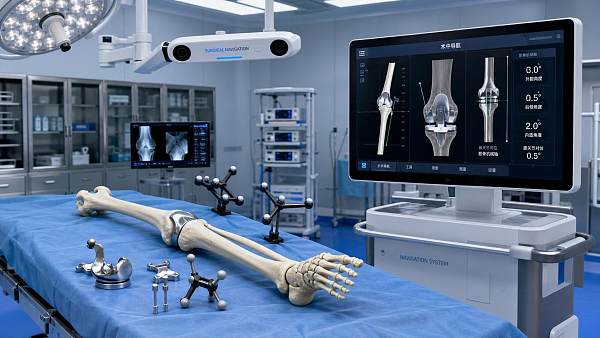
Total knee arthroplasty is a common example. Small alignment errors can influence load distribution, soft tissue balance, and early dissatisfaction.
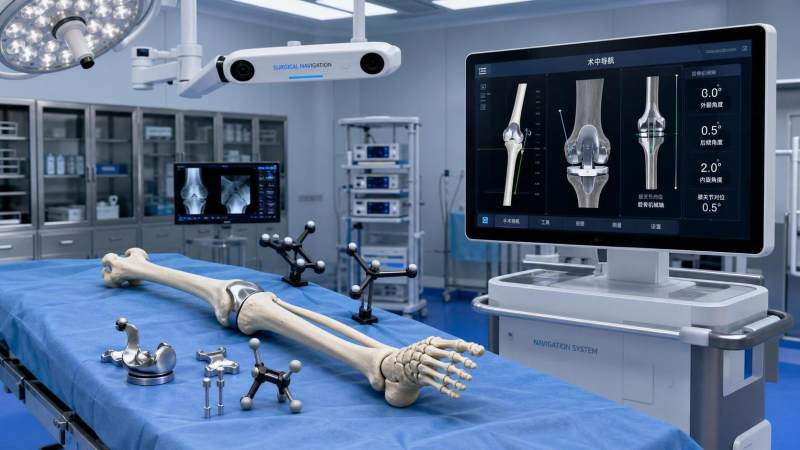
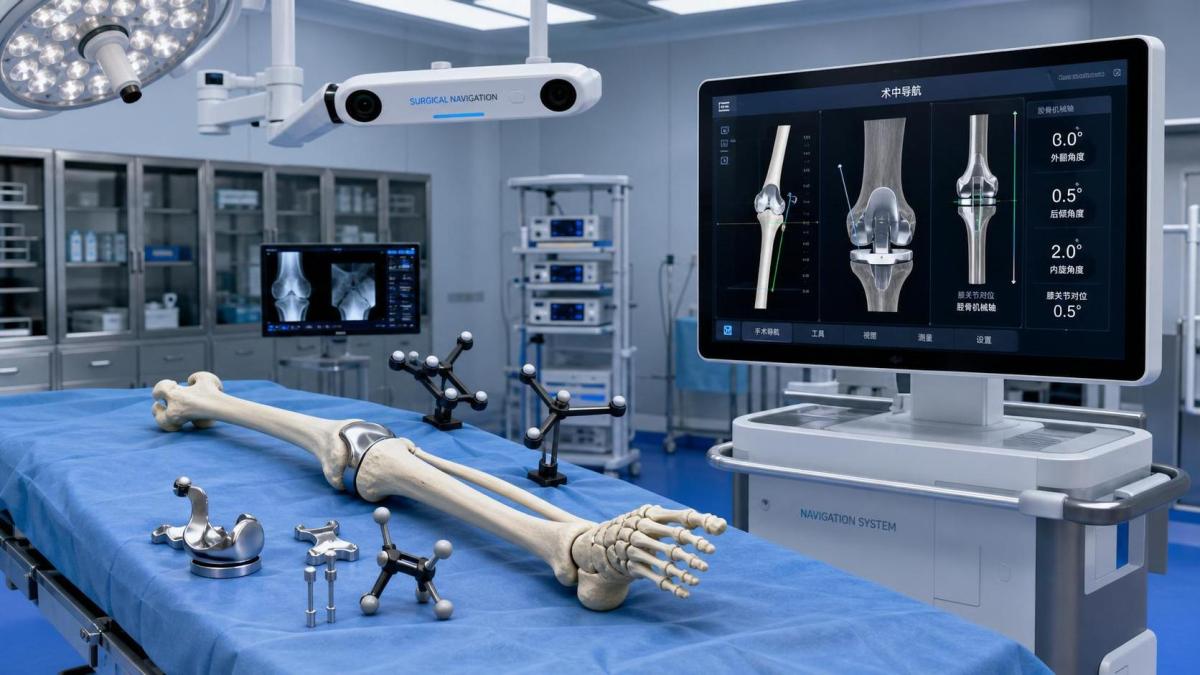
Here, intraoperative navigation for orthopedic surgery helps when mechanical alignment, kinematic assessment, and implant positioning need objective confirmation instead of visual approximation alone.
The same logic applies to hip replacement when cup inclination, anteversion, and leg length restoration are difficult to judge consistently.
Navigation tends to contribute most when pelvic orientation is variable or when revision anatomy reduces confidence in conventional referencing.
Revision procedures where landmarks no longer behave normally
Revision cases often expose the strongest case for intraoperative navigation for orthopedic surgery because the anatomy has already been changed by prior implants, bone loss, or scar tissue.
In these settings, navigation is not only about accuracy. It is also about reducing uncertainty during intraoperative decision-making.
Teams usually need better real-time orientation, clearer implant trajectory planning, and more confidence before committing to irreversible bone preparation.
Deformity correction and tumor-related reconstruction
When preoperative anatomy is already abnormal, standard instruments may preserve repeatability without preserving accuracy.
That is where intraoperative navigation for orthopedic surgery can align preoperative planning with real anatomy after exposure, resection, or correction maneuvers.
The benefit is especially relevant when bone cuts, angular correction, or implant orientation must match a highly individualized plan.
Different Scenarios Do Not Ask the Same Questions
A useful comparison is not navigation versus no navigation in the abstract. It is one clinical scenario versus another.
The table also shows why digital evaluation on platforms such as DMRS increasingly links navigation performance to imaging, data workflows, and surgical system interoperability.
Before Choosing Navigation, Check the Operating Environment
Intraoperative navigation for orthopedic surgery can underperform when the room setup is weak, even if the software specifications look strong.
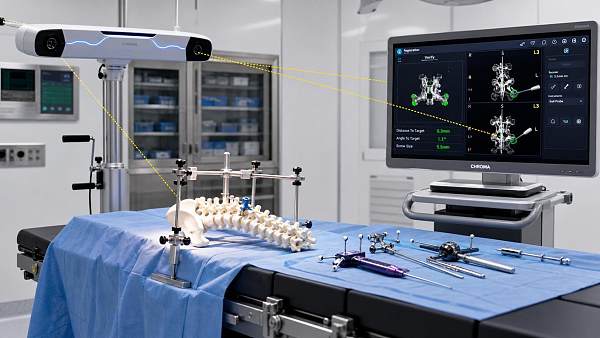
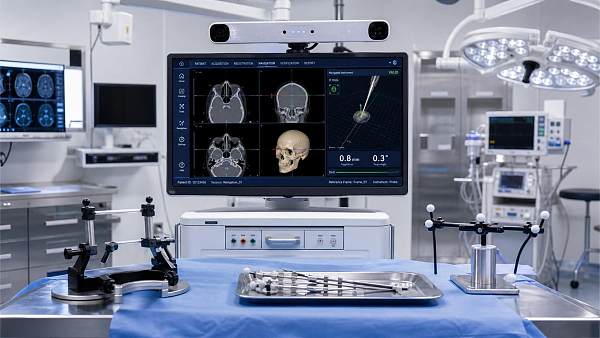
Optical tracking needs line-of-sight discipline. Imaging-based navigation depends on image quality, calibration, and efficient data transfer from PACS or local imaging systems.
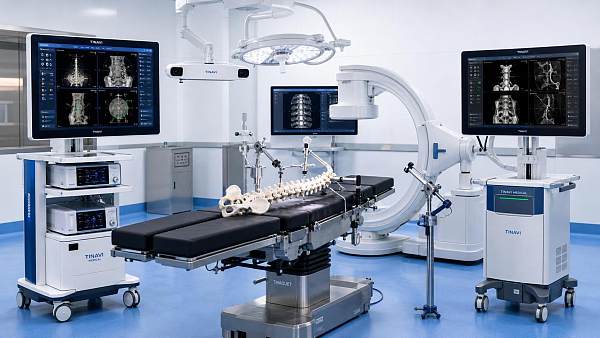
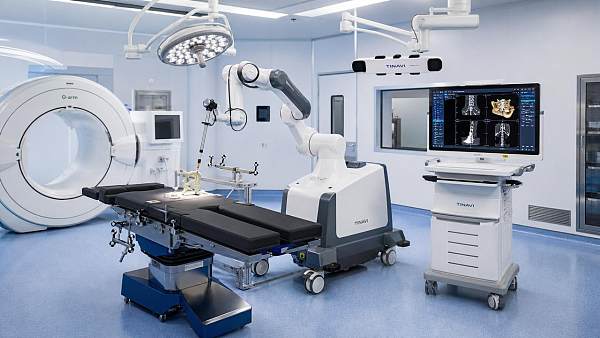
If the surgical site is crowded with robotic arms, C-arms, or additional monitoring equipment, tracker placement and staff movement can affect reliability.
The same is true for hospital digital infrastructure. Case planning, image retrieval, and documentation become easier when navigation systems align with HIS, PACS, and secure workflow protocols.
That broader systems view fits the DMRS perspective on connected healthcare technologies. Accuracy gains often depend on digital coordination, not only on surgical hardware.
- Confirm whether preoperative imaging can be imported without manual rework.
- Check if trackers remain stable during retraction, repositioning, and instrument exchange.
- Measure added setup time in real cases, not vendor simulations.
- Review cybersecurity and data integrity controls for connected systems.
Where Teams Often Misjudge the Fit
A common mistake is assuming that more digital guidance automatically means better outcomes. Accuracy only improves when the navigation data reflects the anatomy correctly.
Registration error, tracker motion, poor image matching, or unrecognized workflow drift can make precise-looking data misleading.
Another misjudgment is evaluating intraoperative navigation for orthopedic surgery only by upfront acquisition cost.
The more relevant assessment includes disposables, service support, software updates, training time, imaging requirements, and compatibility with future robotic or AI-assisted modules.
It is also easy to treat similar procedures as identical. A standard primary arthroplasty case and a post-traumatic reconstruction may share a code category while needing very different navigation value.
The final blind spot is measuring success too narrowly. Better accuracy should be linked to revision risk, implant longevity, workflow repeatability, and postoperative function where data is available.
A Practical Way to Decide When Intraoperative Navigation Improves Orthopedic Accuracy
The best adoption decisions usually begin with a case mix review rather than a technology-first discussion.
If the surgical volume includes revision joints, complex deformities, difficult pelvic orientation, or anatomy with limited visual certainty, intraoperative navigation for orthopedic surgery deserves serious evaluation.
If the case mix is mostly routine and highly standardized, the threshold for adoption should be more demanding.
A practical evaluation path can stay focused:
- Map procedures where alignment or implant position drives long-term outcomes.
- Identify cases with unreliable anatomical landmarks or high revision complexity.
- Test workflow impact, including setup time and registration repeatability.
- Review integration with imaging, records, and cybersecurity requirements.
- Define which accuracy metrics matter before implementation begins.
When these conditions are clearly defined, the role of intraoperative navigation for orthopedic surgery becomes easier to judge without exaggeration.
The next useful step is to compare real surgical scenarios, document error-sensitive procedures, and build an evaluation standard around accuracy, workflow burden, and system compatibility.
Recommended News
 Aug 07, 2026How Accurate Are Surgical Navigation Systems With Optical Tracking in Spine Surgery?Surgical navigation systems with optical tracking in spine surgery can be highly accurate—but only with strong registration, stable reference frames, and disciplined workflows. Learn what really determines performance.
 Jul 25, 2026Real-Time Tracking in Surgical Navigation: Accuracy Limits and OR Workflow ImpactSurgical navigation real time tracking: learn how latency, drift, occlusion, and OR workflow shape real accuracy. A practical guide for evaluators comparing systems with confidence.
 Jul 06, 2026EU Rule Tightens MDR Deadline for IIa Ortho Nav RobotsEU MDR deadline tightens for IIa orthopedic navigation robots: from Oct 1, 2026, products without Annex XIV clinical evaluation may lose EU market access and customs clearance. See supply chain risks.
 Jul 06, 2026Surgical Navigation Systems for Spine Surgery: How to Compare Accuracy and WorkflowSurgical navigation systems for spine surgery: compare accuracy, imaging integration, workflow, training, and total cost to choose a platform that improves OR efficiency and confidence.
 Jul 05, 2026EU MDR Cutoff Ends for IIa Orthopedic Nav-RobotsEU MDR cutoff ends for IIa orthopedic nav-robots on July 4, 2026. Learn how CE certification, MDR technical documentation, and customs rules now impact EU market entry.
 Jul 04, 2026EU Reclassifies AI Orthopedic Nav-Robots as Class IIIEU reclassifies AI orthopedic navigation robots as MDR Class III. See how the July 2026 rule change impacts CE status, EU imports, market access, and undelivered orders.
 Jul 04, 2026Surgical Navigation Platform: Key Features That Reduce Revision RiskDiscover how a surgical navigation platform reduces revision risk with precise registration, real-time tracking, clear 3D visualization, and workflow-friendly integration across complex surgeries.
 Jul 04, 2026Perioperative Robotic Navigation: How to Compare Accuracy and OR FitPerioperative robotic navigation: compare real-world accuracy, OR fit, workflow impact, and integration readiness to choose a system that delivers reliable surgical value.
 Jul 03, 2026EU MDR Class III Status Extends to AI Ortho Nav RobotsEU MDR Class III now applies to AI orthopedic navigation robots. Learn how this update impacts conformity assessment, clinical evidence, EU exports, and post-market compliance.
 Jul 02, 2026EU Extends MDR Annex XVI to Orthopedic Nav-RobotsEU Extends MDR Annex XVI to Orthopedic Nav-Robots: learn how the new Class III MDR rule reshapes CE certification, clinical evaluation, costs, and market access before Oct 26, 2026.
 Jul 02, 2026When Intraoperative Navigation Improves Orthopedic AccuracyIntraoperative navigation for orthopedic surgery improves accuracy in revision joints, deformity correction, and complex implants. Learn when it truly adds value.
 Jul 01, 2026Shanghai Port Delays Stretch Medical Robotics Lead TimesShanghai Port delays are extending medical robotics lead times to 8–12 weeks. Learn how capacity cuts, customs checks, and booking pressure are reshaping export delivery plans.
 Jun 30, 2026EU Adds Orthopedic Nav-Robots to MDR Annex XVIEU adds orthopedic nav-robots to MDR Annex XVI, moving them to Class III from Oct 2026. Learn how this EU MDR update affects market access, compliance, procurement, and delivery planning.
 Jun 27, 2026Surgical Navigation Technology Trends Shaping Orthopedic RoboticsSurgical navigation technology is redefining orthopedic robotics through smarter imaging, seamless workflow integration, and measurable precision—explore the trends driving reliability, scalability, and clinical value.
 Jun 19, 2026Intraoperative Navigation for ENT Surgery: Accuracy, Workflow, and LimitsIntraoperative navigation for ENT surgery explained: explore accuracy, workflow gains, case selection, and system limits for sinus, revision, and skull base procedures.
 Jun 17, 2026Intraoperative Navigation vs Robotics: What Improves Accuracy?Intraoperative navigation vs robotics: discover what truly improves surgical accuracy, where each system performs best, and how hospitals can choose the right fit.
 Jun 14, 2026Orthopedic Medical Surgical Robots: How to Compare Accuracy and ROIOrthopedic medical surgical robots: compare accuracy, workflow fit, and ROI with a practical buyer framework for smarter hospital investment decisions.
 Jun 11, 2026Orthopedic Navigation Robot Platform Comparison: Accuracy, Setup, and OR FitOrthopedic navigation robot platform comparison made practical: assess accuracy consistency, setup time, OR fit, integration, and long-term value to choose the right system with confidence.