Search News
Industry Portal
Popular Tags
Surgical Navigation Technology Trends Shaping Orthopedic Robotics
Author
Time
Click Count
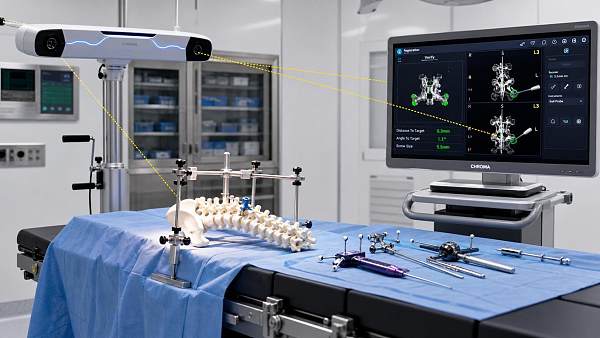
Surgical navigation technology is moving from support tool to orthopedic robotics backbone
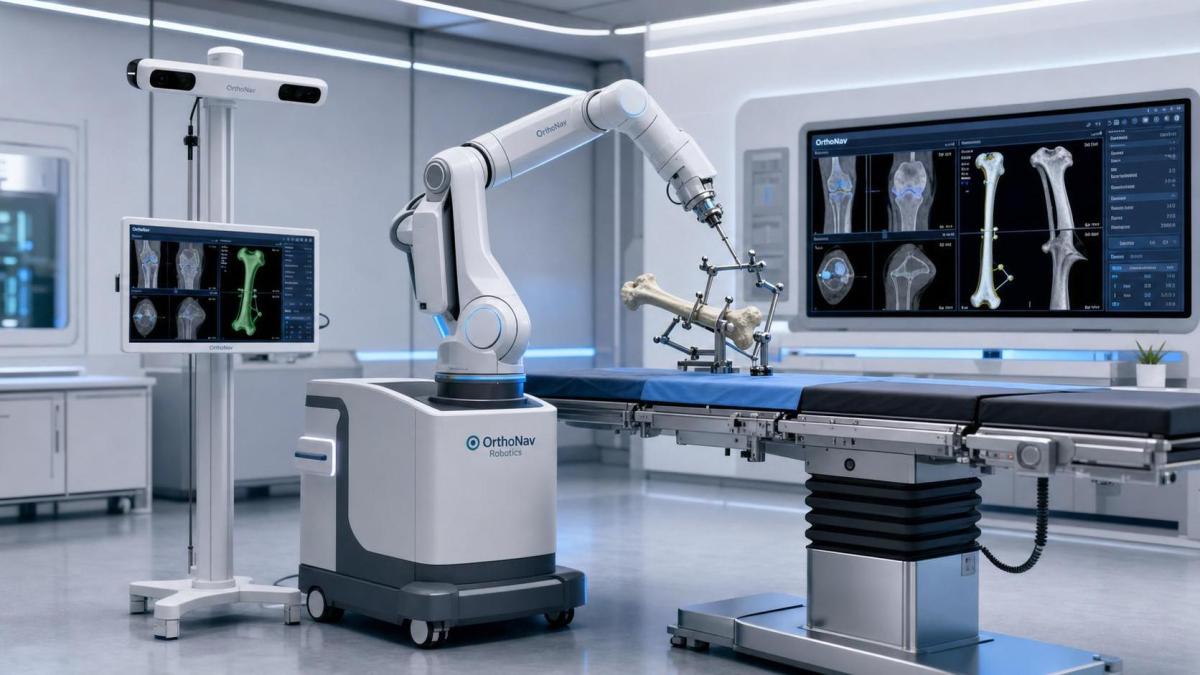
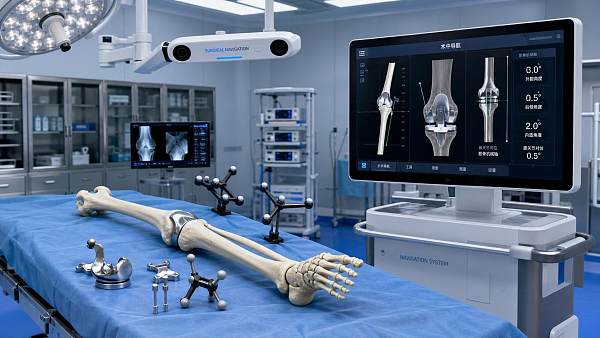
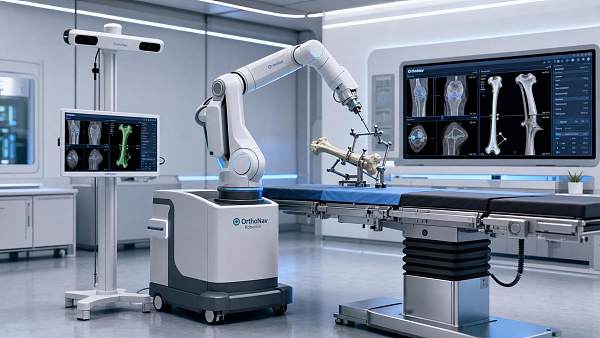
Surgical navigation technology is no longer a peripheral feature in orthopedic robotics.
It is increasingly the layer that determines whether a robotic platform feels clinically precise, operationally efficient, and commercially scalable.
That shift matters because orthopedic robotics has entered a more demanding phase.
Hospitals want measurable accuracy, but they also want fewer workflow disruptions, stronger imaging interoperability, and clearer evidence of system reliability.
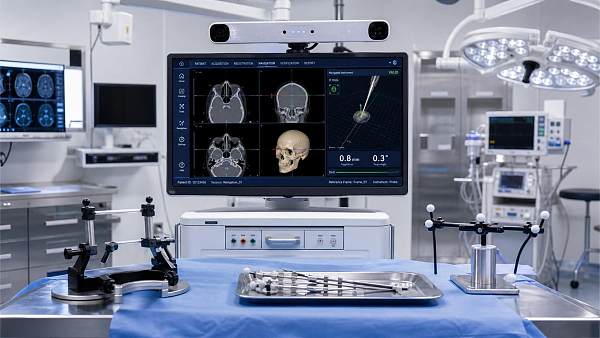
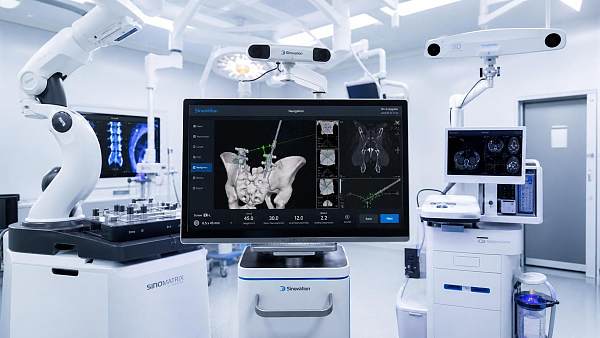
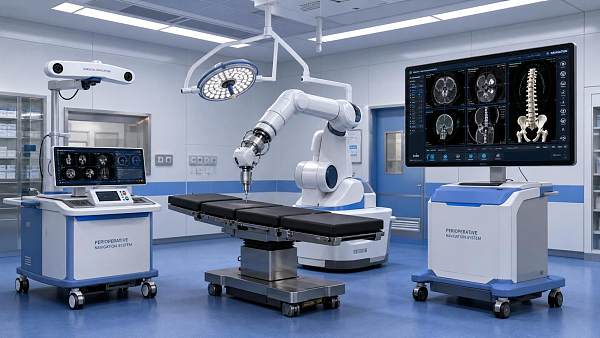
In this environment, surgical navigation technology shapes far more than instrument tracking.
It influences preoperative planning, robotic arm behavior, intraoperative verification, data capture, and post-case analysis.
Across the broader digital medical landscape, this trend fits a larger pattern.
Platforms such as DMRS increasingly examine technologies through connected clinical workflows, software trust, integration readiness, and compliance risk, not through isolated device specifications.
That perspective is especially useful now, because recent demand is less about owning a robot and more about evaluating whether the full navigation stack can deliver repeatable value.
The market signal is clear: navigation is being judged on integration, not just accuracy
A few years ago, discussions around surgical navigation technology centered on positional precision and registration performance.
Those metrics still matter, but they no longer settle the evaluation.
More visible now is the demand for systems that fit into digital hospital infrastructure without creating bottlenecks.
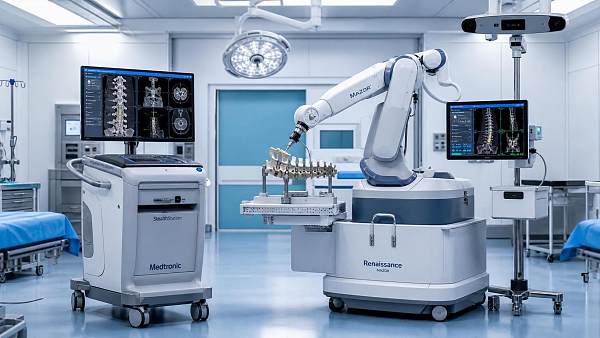
Orthopedic robotics platforms are expected to exchange data with PACS, planning software, imaging workstations, and surgical documentation systems.
This changes the definition of a strong navigation solution.
A technically advanced tracker may still struggle if image import is slow, if calibration takes too long, or if workflow steps depend on repeated manual correction.
The stronger platforms are responding by compressing setup time, reducing line-of-sight vulnerability, and improving compatibility with CT-based and image-light workflows.
Another noticeable change is that surgical navigation technology is being reviewed as part of a software environment.
That includes user interface logic, planning transparency, update management, cybersecurity posture, and auditability.
In practical terms, navigation has become a system behavior question, not only a tracking hardware question.
Why this shift is becoming more visible now
Several forces are pushing surgical navigation technology into a more strategic role.
The first is procedural complexity.
Joint reconstruction, spine work, and personalized implant positioning increasingly depend on finer anatomical mapping and more adaptive robotic guidance.
The second is pressure for consistency across sites and surgeons.
Robotic adoption creates expectations around standardization, and surgical navigation technology is central to that promise.
The third is the rise of data-driven validation.
Hospitals and developers increasingly want procedural data that can support outcome analysis, training improvement, and regulatory evidence.
Navigation systems are one of the most direct sources of that intraoperative data.
What ties these factors together is the same point: surgical navigation technology now sits at the intersection of mechanics, imaging, software, and clinical decision support.
The most important technical direction is tighter fusion between imaging, planning, and robotic execution
One of the strongest trends is the reduction of distance between planning and execution.
Older workflows often treated planning, navigation, and robotic control as adjacent modules.
Newer architectures are trying to make them behave like one coordinated environment.
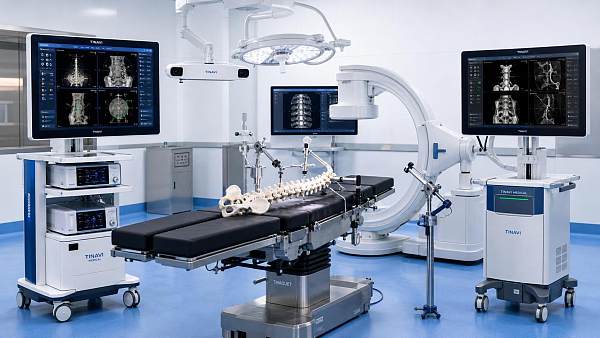
This is where surgical navigation technology becomes more influential in orthopedic robotics performance.
If anatomical mapping is linked cleanly to robotic path control, corrections can happen earlier.
If registration confidence is visible to the user, trust improves.
If planning data transfers without manual friction, case time becomes easier to predict.
This is also the area where AI begins to matter more, though often indirectly.
AI-assisted segmentation, anatomical recognition, and planning support can reduce operator burden.
Yet the commercial value appears only when the navigation pipeline remains transparent and clinically verifiable.
That is why black-box behavior remains a concern.
In orthopedic robotics, confidence depends on seeing how the system reached its positional logic, not simply on receiving a recommendation.
The impact is spreading beyond the operating room
The effect of surgical navigation technology is no longer limited to intraoperative positioning.
It increasingly affects planning teams, software validation groups, hospital IT environments, and long-term service models.
That wider impact is one reason the topic fits naturally within a platform like DMRS, where robotics, medical AI software, and digital infrastructure are analyzed together.
- Clinical workflow impact: fewer manual handoffs, faster verification, and better alignment between plan and execution.
- IT impact: stronger need for PACS connectivity, secure data handling, update governance, and system logging.
- Regulatory impact: more scrutiny around software changes, performance documentation, and risk controls.
- Commercial impact: buyers increasingly compare total platform resilience, not just robotic hardware capabilities.
A more subtle consequence is that service expectations change as navigation matures.
Support now includes software updates, interoperability maintenance, calibration assurance, and cyber risk monitoring.
That gives surgical navigation technology a recurring operational footprint, similar to other connected healthcare systems.
Where strong evaluations are starting to focus
From a technical assessment perspective, the conversation is becoming more disciplined.
Headline accuracy claims still attract attention, but deeper review now centers on how navigation performs under real constraints.
More useful comparisons often involve questions like these.
- How stable is registration when anatomy visibility is imperfect?
- How much workflow interruption occurs during calibration or tracker repositioning?
- How well does the system connect with existing imaging and documentation environments?
- How transparent are software updates and algorithm changes?
- What evidence exists for repeatability across institutions and case types?
- How well does the platform capture data for quality review and future optimization?
These questions matter because implementation risk often appears outside the specification sheet.
In many deployments, the limiting factor is not robotic movement itself.
It is the consistency of the navigation workflow across real surgical conditions and real digital infrastructure.
The next phase will reward systems built for reliability, openness, and measurable learning
Looking ahead, surgical navigation technology is likely to become even more central to orthopedic robotics differentiation.
But the winning direction is not simply more features.
It is more dependable orchestration across imaging, planning, robotics, compliance, and data systems.
The strongest long-term signal is that navigation platforms will be judged by how well they support measurable learning.
That includes procedural analytics, complication review, training feedback, and integration with broader digital hospital strategies.
For that reason, the next practical step is not to track trends in isolation.
It is to compare surgical navigation technology through a connected framework.
Review imaging compatibility, workflow burden, cybersecurity posture, software traceability, and data usability side by side.
Then monitor whether those factors are improving at the same pace as accuracy claims.
That approach gives a clearer read on which orthopedic robotics systems are built for durable clinical and market relevance.
Recommended News
 Aug 07, 2026How Accurate Are Surgical Navigation Systems With Optical Tracking in Spine Surgery?Surgical navigation systems with optical tracking in spine surgery can be highly accurate—but only with strong registration, stable reference frames, and disciplined workflows. Learn what really determines performance.
 Jul 25, 2026Real-Time Tracking in Surgical Navigation: Accuracy Limits and OR Workflow ImpactSurgical navigation real time tracking: learn how latency, drift, occlusion, and OR workflow shape real accuracy. A practical guide for evaluators comparing systems with confidence.
 Jul 06, 2026EU Rule Tightens MDR Deadline for IIa Ortho Nav RobotsEU MDR deadline tightens for IIa orthopedic navigation robots: from Oct 1, 2026, products without Annex XIV clinical evaluation may lose EU market access and customs clearance. See supply chain risks.
 Jul 06, 2026Surgical Navigation Systems for Spine Surgery: How to Compare Accuracy and WorkflowSurgical navigation systems for spine surgery: compare accuracy, imaging integration, workflow, training, and total cost to choose a platform that improves OR efficiency and confidence.
 Jul 05, 2026EU MDR Cutoff Ends for IIa Orthopedic Nav-RobotsEU MDR cutoff ends for IIa orthopedic nav-robots on July 4, 2026. Learn how CE certification, MDR technical documentation, and customs rules now impact EU market entry.
 Jul 04, 2026EU Reclassifies AI Orthopedic Nav-Robots as Class IIIEU reclassifies AI orthopedic navigation robots as MDR Class III. See how the July 2026 rule change impacts CE status, EU imports, market access, and undelivered orders.
 Jul 04, 2026Surgical Navigation Platform: Key Features That Reduce Revision RiskDiscover how a surgical navigation platform reduces revision risk with precise registration, real-time tracking, clear 3D visualization, and workflow-friendly integration across complex surgeries.
 Jul 04, 2026Perioperative Robotic Navigation: How to Compare Accuracy and OR FitPerioperative robotic navigation: compare real-world accuracy, OR fit, workflow impact, and integration readiness to choose a system that delivers reliable surgical value.
 Jul 03, 2026EU MDR Class III Status Extends to AI Ortho Nav RobotsEU MDR Class III now applies to AI orthopedic navigation robots. Learn how this update impacts conformity assessment, clinical evidence, EU exports, and post-market compliance.
 Jul 02, 2026EU Extends MDR Annex XVI to Orthopedic Nav-RobotsEU Extends MDR Annex XVI to Orthopedic Nav-Robots: learn how the new Class III MDR rule reshapes CE certification, clinical evaluation, costs, and market access before Oct 26, 2026.
 Jul 02, 2026When Intraoperative Navigation Improves Orthopedic AccuracyIntraoperative navigation for orthopedic surgery improves accuracy in revision joints, deformity correction, and complex implants. Learn when it truly adds value.
 Jul 01, 2026Shanghai Port Delays Stretch Medical Robotics Lead TimesShanghai Port delays are extending medical robotics lead times to 8–12 weeks. Learn how capacity cuts, customs checks, and booking pressure are reshaping export delivery plans.
 Jun 30, 2026EU Adds Orthopedic Nav-Robots to MDR Annex XVIEU adds orthopedic nav-robots to MDR Annex XVI, moving them to Class III from Oct 2026. Learn how this EU MDR update affects market access, compliance, procurement, and delivery planning.
 Jun 27, 2026Surgical Navigation Technology Trends Shaping Orthopedic RoboticsSurgical navigation technology is redefining orthopedic robotics through smarter imaging, seamless workflow integration, and measurable precision—explore the trends driving reliability, scalability, and clinical value.
 Jun 19, 2026Intraoperative Navigation for ENT Surgery: Accuracy, Workflow, and LimitsIntraoperative navigation for ENT surgery explained: explore accuracy, workflow gains, case selection, and system limits for sinus, revision, and skull base procedures.
 Jun 17, 2026Intraoperative Navigation vs Robotics: What Improves Accuracy?Intraoperative navigation vs robotics: discover what truly improves surgical accuracy, where each system performs best, and how hospitals can choose the right fit.
 Jun 14, 2026Orthopedic Medical Surgical Robots: How to Compare Accuracy and ROIOrthopedic medical surgical robots: compare accuracy, workflow fit, and ROI with a practical buyer framework for smarter hospital investment decisions.
 Jun 11, 2026Orthopedic Navigation Robot Platform Comparison: Accuracy, Setup, and OR FitOrthopedic navigation robot platform comparison made practical: assess accuracy consistency, setup time, OR fit, integration, and long-term value to choose the right system with confidence.