Search News
Industry Portal
Popular Tags
Red Sea Disruption Extends Laparoscopic Robot Lead Times
Author
Time
Click Count
On 2026-07-13, a joint notice from Maersk and COSCO Shipping signaled a material change in the operating conditions governing Asia-Europe container shipments: tighter Suez transit constraints tied to worsening security conditions in the Red Sea. For exporters and distributors of high-value precision medical equipment, especially complete laparoscopic robotic systems, this matters less as a general freight story and more as an execution issue affecting booking access, delivery timing, procurement scheduling, and downstream fulfillment commitments.
What has been confirmed in the shipping notice
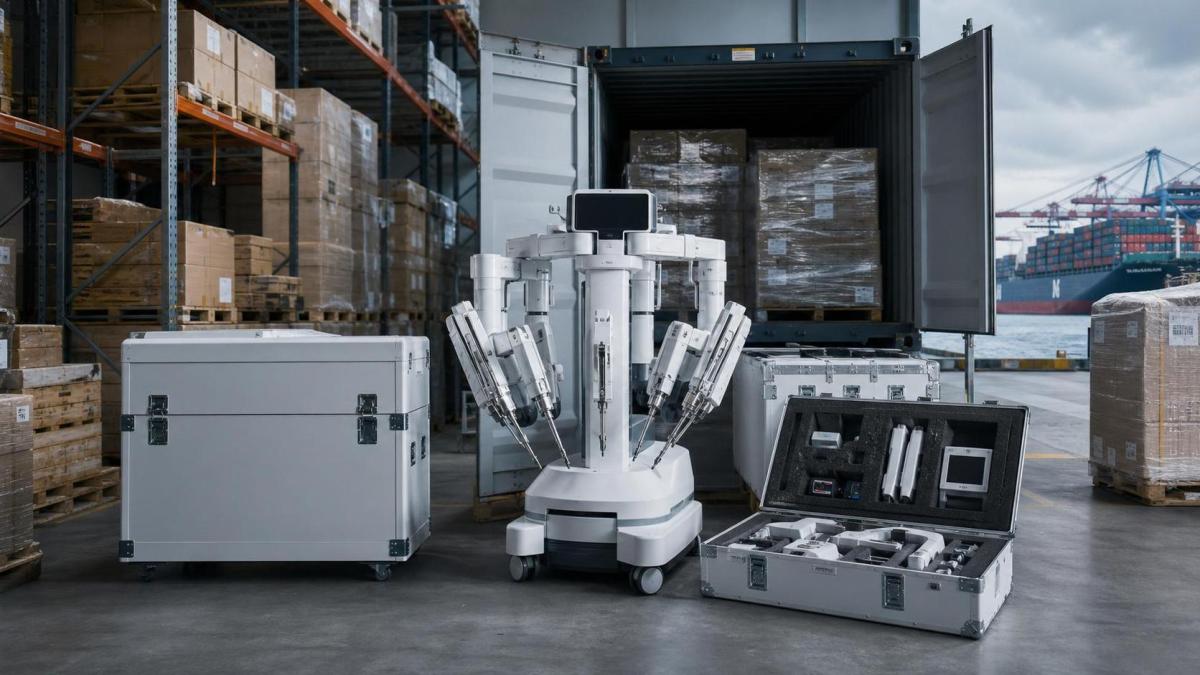
According to the joint announcement dated 2026-07-13, security conditions in the Red Sea deteriorated further, increasing restrictions on Suez Canal passage. As a direct result, container freight rates on the main Asia-Europe route rose 23% in a single week. The notice also indicated that space for high-value precision medical equipment, including complete laparoscopic robotic systems, became tight, and that average delivery cycles from Shanghai or Shenzhen to Rotterdam or Hamburg extended to 12-14 weeks. It further stated that multiple international distributors had already started inventory preparation plans and were giving priority to locking in Q3 production capacity.
Where the pressure is likely to appear first
Exporters of complete systems face a tighter delivery window
From an industry perspective, exporters of complete laparoscopic robotic systems are likely to feel the impact first because the confirmed change is not only a freight cost increase but also a reduction in accessible shipping capacity for high-value equipment. The business effect is likely to concentrate in booking arrangements, promised shipment schedules, contract delivery planning, and export document timing. What deserves closer attention is whether internal delivery commitments, commercial documentation, and shipment readiness records remain aligned when lead times stretch to 12-14 weeks.
Distributors and channel operators may shift from normal replenishment to capacity reservation
Observably, the summary already points to a change in channel behavior: multiple international distributors have started stock preparation plans and are prioritizing Q3 capacity lock-in. For channel operators, the issue is likely to move from routine replenishment toward earlier procurement decisions, earlier shipment booking, and closer coordination with suppliers on dispatch timing. In practical terms, this can affect purchase order sequencing, acceptance timing, and the handling of delivery commitments made to hospitals or other end customers.
Supply chain service providers will need closer control over handover and documentation rhythm
For logistics coordinators and related supply chain service providers, the confirmed shipping disruption implies a higher requirement for timing control across cargo handover, booking confirmation, and shipment status updates. Analysis shows that when space is tight for high-value medical equipment, operational discipline around packing readiness, commercial paperwork, and transport milestones becomes more important, even if no new formal certification rule has been announced in the input. The immediate concern is execution consistency rather than a newly published compliance regime.
Procurement teams and after-sales planners may need to reassess delivery-linked obligations
Buyers, project planners, and after-sales service teams may also be affected because longer transit cycles can alter installation windows, training schedules, spare-part planning, and customer-facing service commitments tied to arrival dates. It is more appropriate to understand this as pressure on delivery-linked obligations and scheduling reliability, rather than as a confirmed change in product certification requirements.
What companies should review now
Recheck whether delivery promises and trade documents still match actual transit conditions
Analysis shows that firms shipping complete systems on the Asia-Europe lane should review whether quoted lead times, shipment clauses, booking assumptions, and internal dispatch plans still reflect the newly reported 12-14 week cycle. Where customer tenders or purchase documents rely on specific delivery windows, those terms deserve immediate verification against current shipping conditions.
Track whether route disruption changes the practical handling of compliance files
Although the input does not announce a new certification or regulatory requirement, companies should still monitor whether extended transit and tighter space change the practical handling of technical files, inspection records, shipment documents, or handover materials attached to export deliveries. What deserves closer attention is not a confirmed rule change in certification, but the risk that timing gaps create document inconsistencies during shipment execution.
Watch Q3 capacity allocation and supplier commitment discipline
The confirmed move by multiple international distributors to lock Q3 capacity suggests that production allocation and shipment priority may become more commercially sensitive in the near term. Export manufacturers and procurement teams should pay attention to whether supplier commitments, production slots, and shipment reservations remain synchronized, especially for complete systems with long preparation cycles.
Prepare for more scrutiny on service timing and traceability
Observably, when delivery periods lengthen for high-value medical equipment, downstream questions often shift toward when the unit shipped, how the handover was recorded, and whether promised installation or service windows remain supportable. Companies should therefore keep shipment records, delivery communications, and traceability materials in a condition that can support later commercial or service-side review.
Why this should be read as an execution signal
Analysis shows that this development is better understood as an operational and trade-execution signal than as a stand-alone freight headline. The confirmed facts point to a change in shipping conditions that can directly affect fulfillment reliability for complete laparoscopic robotic systems on the Asia-Europe corridor. At the same time, the input does not establish a new formal regulation, certification standard, or government trade restriction. For that reason, the market should treat the notice as evidence of already visible execution pressure, while continuing to observe whether procurement language, delivery terms, and channel behavior adjust further.
How to interpret the current stage
At this stage, the most balanced reading is that the Red Sea disruption has already translated into a practical change in delivery conditions for affected shipments, especially for high-value precision medical equipment with tight space availability. It is more appropriate to understand this as an implemented operating constraint with commercial and supply chain consequences, while any broader rule interpretation beyond the confirmed shipping notice still requires observation. The key issue for industry participants is not abstract market sentiment, but whether contracts, schedules, and delivery execution remain realistic under the revised transit window.
Basis of this article and what still needs verification
This article is based on the user-provided news title, event date, and event summary. For events of this kind, relevant source types typically include official carrier notices, statements from regulatory or trade authorities, customs or trade administration information, industry association releases, standards-related documents, and reporting by authoritative media. No specific official source link was provided in the input, so the exact official link still needs to be verified on an ongoing basis. Further observation is also needed on later execution guidance, any changes in procurement documents, market feedback from distributors and exporters, and how companies adjust delivery and capacity commitments in practice.
Recommended News
 Sep 09, 2026What drives minimally invasive surgery technology cost for hospitals?Minimally invasive surgery technology cost: uncover the key drivers—from total ownership and disposables to utilization, reimbursement, and ROI—for smarter hospital investment decisions.
 Aug 30, 2026How robotic surgery platforms affect operating room throughputRobotic surgery platforms can reshape operating room throughput. Explore practical ways to improve setup, docking, instrument flow, scheduling, and turnover reliability.
 Aug 28, 2026What drives the total cost of surgical robotics in the USA?Surgical robotics USA costs go beyond purchase price. Explore capital, consumables, service, training, IT integration, and volume factors for smarter hospital procurement.
 Aug 22, 2026How real-time control affects the safety of medical surgical robotsMedical surgical robots real time control directly impacts safety, precision, and fault response. Learn how deterministic timing protects tissue, supports surgeons, and reveals platform maturity.
 Aug 17, 2026How much does remote surgical systems USA cost for hospitals?Remote surgical systems USA cost for hospitals depends on robotics, networking, integration, training, and service. Discover key budget drivers and avoid hidden expenses before you buy.
 Aug 13, 2026China Surgical Robot Exports Up 330% in H1 2026China surgical robot exports surged 330% in H1 2026, signaling stronger compliance, supply-chain resilience, and access to Europe. Explore what this means for buyers, distributors, and regulated market entry.
 Aug 11, 2026Chinese Surgical Robots Gain Entry to U.S. and EuropeChinese surgical robots are entering the U.S. and Europe faster, with shorter certification cycles and new service-based models reshaping hospital access, distribution, and global market opportunities.
 Aug 10, 2026How to Evaluate a Medical Surgical Robots Supplier for Clinical Fit and Service RiskMedical surgical robots supplier selection requires more than feature checks. Learn how to assess clinical fit, service risk, integration, and long-term support for safer, smarter procurement.
 Aug 05, 2026How to Evaluate a CE Marked Robotic Surgery System for EU Market AccessCE marked robotic surgery system evaluation for EU market access: learn the key MDR, software, usability, clinical, and cybersecurity checks assessors use to spot risks fast.
 Jul 31, 2026How to Evaluate Integration Costs in a Medical Surgical Robot PlatformMedical surgical robot platform cost evaluation starts with integration, not purchase price. Learn how to assess interfaces, cybersecurity, workflow, training, and hidden operating costs before you buy.
 Jul 15, 2026Minimally Invasive Robotic Surgery Price: What Drives Total Procedure Cost?Minimally invasive robotic surgery price depends on more than the system quote. Learn the real cost drivers—tools, service, training, volume, and ROI.
 Jul 14, 2026Red Sea Disruption Extends Laparoscopic Robot Lead TimesRed Sea disruption extends laparoscopic robot lead times as Asia-Europe shipping tightens. See how booking delays, Q3 capacity pressure, and delivery risks may impact medical equipment supply.
 Jul 13, 2026Red Sea Diversions Lift Europe-Bound Freight, Raising Medical Robot Export CostsRed Sea diversions are lifting Europe-bound freight and raising medical robot export costs. See how Laparoscopic Robots and Orthopedic Nav-Robots face pricing, delivery, and FOB/CIF pressure.
 Jul 13, 2026Surgical Simulation Technology for Training: How to Compare Realism and ROISurgical simulation technology for training: compare realism, haptics, workflow fit, and ROI to choose a platform that improves skills, supports adoption, and delivers long-term value.
 Jul 12, 2026Medical Surgical Robot Platform Costs: What Drives ROI in 2026Medical surgical robot platform costs in 2026 go far beyond purchase price. Discover the key ROI drivers—utilization, service, downtime, and per-case costs—to make smarter procurement decisions.
 Jul 12, 2026How to Evaluate a Medical Surgical Robot Platform for Multi-Specialty UseMedical surgical robot platform evaluation starts with real multi-specialty needs. Learn how to compare workflow fit, integration, risk, and total cost for smarter purchasing.
 Jul 08, 2026Medical Surgical Robots in Singapore: Market Direction and Adoption BarriersMedical surgical robots Singapore is shifting from hype to selective adoption. Explore market direction, integration hurdles, training pressure, and where real hospital demand is growing.
![]() Jul 07, 2026EU Tightens MDR Transition for Laparoscopic RobotsLaparoscopic Robots face tougher EU MDR transition rules from Oct 1, 2026. Learn how the new CE audit on force feedback impacts cost, timelines, and market entry planning.
Jul 07, 2026EU Tightens MDR Transition for Laparoscopic RobotsLaparoscopic Robots face tougher EU MDR transition rules from Oct 1, 2026. Learn how the new CE audit on force feedback impacts cost, timelines, and market entry planning.![]() Jul 07, 2026Minimally Invasive Surgery Navigation: What Improves Accuracy in the OR?Minimally invasive surgery navigation improves OR accuracy through stable tracking, precise registration, low latency, and smooth workflow integration. Learn what truly drives safer, more confident surgical decisions.
Jul 07, 2026Minimally Invasive Surgery Navigation: What Improves Accuracy in the OR?Minimally invasive surgery navigation improves OR accuracy through stable tracking, precise registration, low latency, and smooth workflow integration. Learn what truly drives safer, more confident surgical decisions. Jul 06, 2026Surgical Robotics Training for Residents: A Practical Curriculum ChecklistSurgical robotics training for residents made practical: explore a checklist-driven curriculum covering simulation, live-case readiness, assessment, and workflow alignment for safer, smarter program growth.
 Jul 02, 2026Shanghai Port Delays Push Laparoscopic Robot Lead Times to 10-14 WeeksShanghai Port delays are pushing laparoscopic robot lead times to 10–14 weeks, raising freight costs and delivery risks. Learn what exporters, buyers, and distributors should do now.
 Jul 01, 2026EU Reclassifies Laparoscopic Robots as Class IIIEU reclassifies laparoscopic robots as Class III under MDR Annex XVI. Learn the October 2026 deadline, Class IIb resubmission impact, and key compliance actions for manufacturers.
 Jul 01, 2026Robotic Surgery Platforms: Cost Drivers, Service Terms, and ROI SignalsRobotic surgery platforms: understand true cost drivers, service terms, and ROI signals to compare vendors, reduce risk, and make smarter long-term hospital investment decisions.
 Jul 01, 2026Minimally Invasive Surgery Systems: Key Performance Metrics to CompareMinimally invasive surgery systems compared through key metrics like precision, visualization, stability, workflow, and total value—discover what truly matters before you buy.