Search News
Industry Portal
Popular Tags
How to Evaluate a Minimally Invasive Robotic Surgery Manufacturer
Author
Time
Click Count
Choosing a minimally invasive robotic surgery manufacturer is rarely a simple equipment comparison. The decision affects surgical precision, operating room workflow, cybersecurity exposure, service continuity, and the long-term economics of a robotic program.
That is why evaluation has shifted beyond brochures and headline features. A credible review now looks at clinical usability, regulatory discipline, software architecture, integration readiness, and whether the manufacturer can support adoption after installation.
In the wider digital health market, surgical robotics no longer stands alone. Platforms such as DMRS track how robotics connects with hospital IT, medical AI, imaging systems, data protection, and connected care, making supplier assessment more practical and more demanding.
What the manufacturer is really being evaluated for
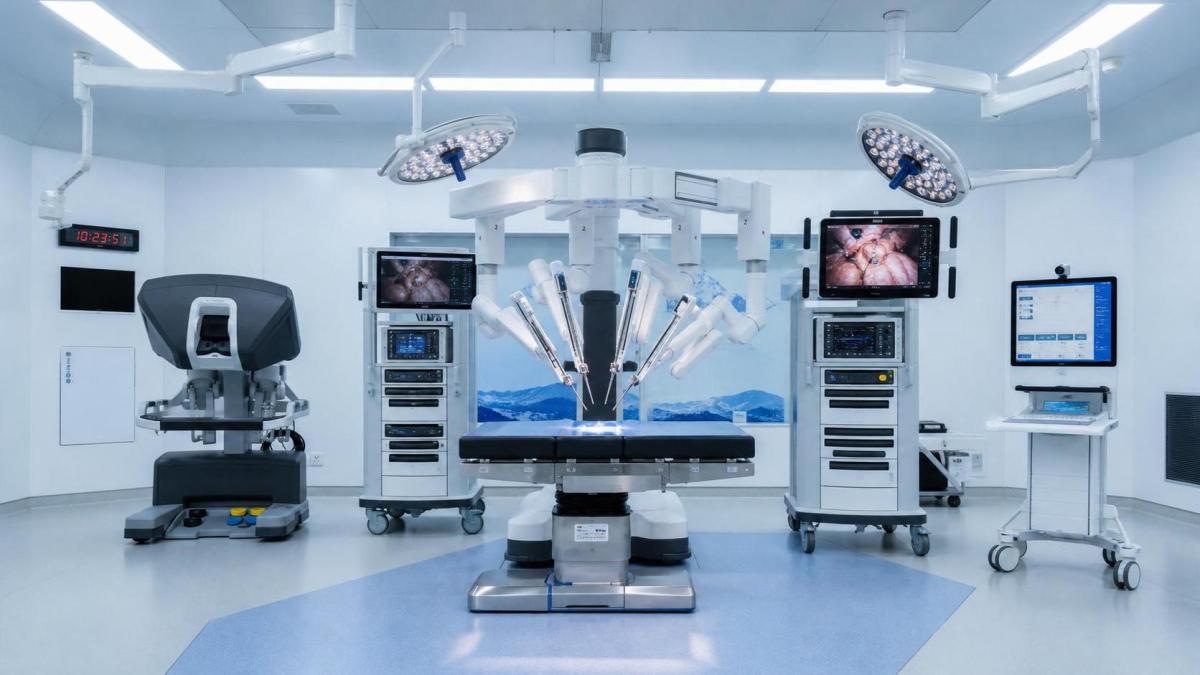
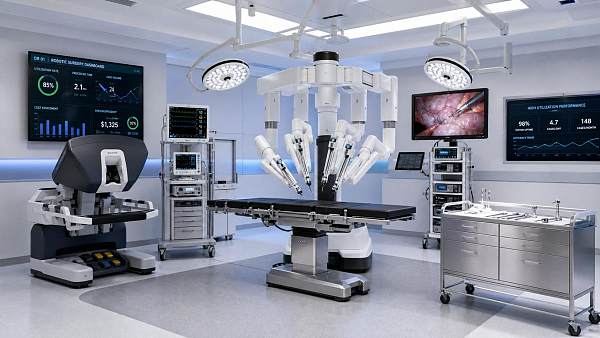
A minimally invasive robotic surgery manufacturer is not only selling a console, robotic arms, and instruments. It is delivering a surgical platform that must perform consistently across clinical, technical, and operational environments.
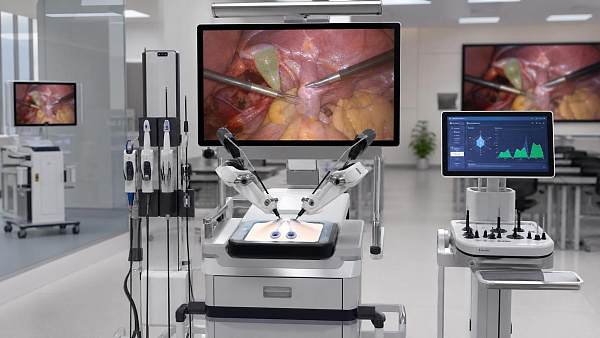
At the core, minimally invasive robotic systems are designed to improve dexterity, visualization, tremor reduction, and procedural control. Those benefits matter only when hardware, software, accessories, and support function as one dependable ecosystem.
This is where many evaluations become too narrow. A system may appear advanced on paper, yet still create friction through difficult setup, limited instrument life, poor imaging compatibility, or slow response when faults occur.
A strong manufacturer should therefore be judged on platform maturity, evidence quality, training design, service capability, and the ability to fit into real hospital processes rather than idealized demonstrations.
Why this category deserves closer scrutiny now
The robotic surgery market is expanding, but so is complexity. New entrants are introducing alternatives in laparoscopy, endoluminal procedures, orthopedic navigation, and specialty robotics, while hospitals face tighter capital controls and higher accountability for outcomes.
At the same time, robotic platforms are becoming more software-driven. Features such as 3D visualization, force-related feedback logic, workflow analytics, remote diagnostics, and AI-assisted functions raise the importance of software validation and data governance.
From an industry intelligence perspective, this overlap matters. DMRS covers surgical robotics alongside SaMD, imaging AI, HIS, PACS, cloud infrastructure, and connected medical technologies because these systems increasingly influence each other in clinical deployment.
In practical terms, evaluating a minimally invasive robotic surgery manufacturer now means assessing whether it can operate inside a digital hospital strategy, not only inside a single operating room.
Clinical performance should be tested beyond headline claims
Manufacturers often emphasize precision, smaller incisions, and shorter recovery periods. Those are important outcomes, but a buyer should examine how the system produces those results in daily surgical use.
Look for evidence tied to real procedures
Procedure-specific evidence is more useful than broad claims. Outcomes in urology may not translate directly to gynecology, thoracic surgery, or general surgery.
Questions worth exploring include conversion rates, complication profiles, docking time, console time, blood loss, readmission trends, and consistency across surgeon experience levels.
Study ergonomics and workflow efficiency
A strong robotic platform should reduce friction, not shift it elsewhere. Setup complexity, trocar flexibility, instrument exchange speed, and team communication all influence case throughput.
Usability matters for the full operating room team. If sterilization, positioning, or troubleshooting are cumbersome, the practical value of the system declines even when clinical capability appears strong.
Regulatory quality is a direct signal of manufacturer discipline
For any minimally invasive robotic surgery manufacturer, regulatory standing is more than a checklist. It reflects how seriously the company manages design controls, risk analysis, software updates, complaint handling, and post-market surveillance.
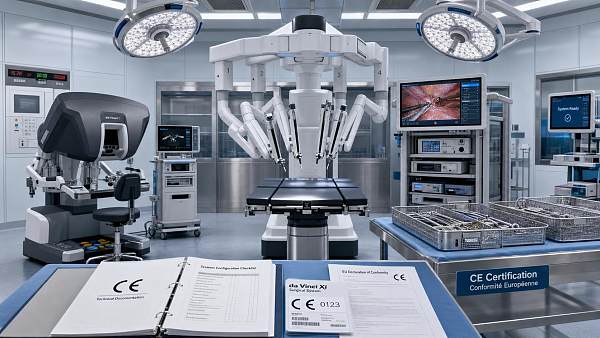
Review clearance pathways, intended use language, quality certifications, and market approvals relevant to the deployment region. FDA clearance, CE marking under current rules, and ISO-aligned quality systems each reveal part of the picture.
Software-heavy platforms require additional attention. If the manufacturer promotes analytics, image guidance, or AI-enabled support tools, it should explain validation boundaries, update governance, cybersecurity controls, and data handling responsibilities clearly.
This is one reason broader healthcare technology intelligence is valuable. The same compliance habits that affect SaMD, imaging AI, and cloud records also influence robotic surgery reliability and risk exposure.
Integration readiness often separates mature platforms from attractive prototypes
A robotic system rarely works in isolation. It interacts with imaging, video capture, sterilization workflows, OR scheduling, patient records, and sometimes cloud-based service tools.
That means the evaluation should cover more than robotic mechanics. It should include interoperability, data export capability, cybersecurity architecture, and whether the manufacturer can coordinate with hospital IT and clinical engineering.
If a manufacturer cannot explain these connections in concrete terms, the platform may still be early in its operational maturity.
Commercial value depends on the full lifecycle, not the purchase price
A low entry quote does not automatically mean better value. For a minimally invasive robotic surgery manufacturer, the more revealing question is how cost behaves over five to seven years.
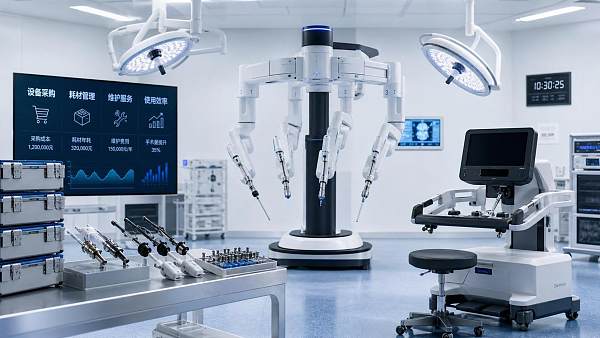
Instrument reuse limits, service contracts, software licensing, disposables, training fees, upgrade pathways, and procedure volume assumptions all shape the true financial profile.
Some manufacturers support flexible models such as per-procedure charging, leasing, or bundled service structures. Those options can be useful, but only if the assumptions are transparent and clinically sustainable.
It is also worth comparing how the manufacturer handles obsolescence risk. A clear roadmap for accessories, software support, and future compatibility often indicates stronger long-term planning.
The supplier review should include post-installation realities
Installation is only the starting point. Many robotic programs struggle later because adoption support was underestimated.
Training quality changes outcomes
Effective training should cover surgeons, nurses, technicians, sterilization teams, and biomedical support staff. It should also include competency refreshers, not only initial onboarding.
Service speed needs measurable standards
Ask for uptime benchmarks, spare parts strategy, engineer coverage, and escalation timelines. Robotic downtime can disrupt case schedules and erode confidence quickly.
Reference sites should resemble the intended environment
A manufacturer may perform well at flagship centers yet struggle in mid-volume hospitals or cross-border installations. Comparable reference sites often reveal more than polished case studies.
- Review service logs and response commitments, not only testimonials.
- Check whether training is standardized or depends on local improvisation.
- Confirm how software updates are tested and scheduled around clinical use.
- Ask how the manufacturer supports expansion into additional specialties.
A practical framework for comparing manufacturers
When several options appear credible, a structured scorecard helps keep the review balanced. The most useful framework combines clinical, technical, compliance, operational, and commercial dimensions.
Rather than overweighting one demonstration, compare each minimally invasive robotic surgery manufacturer against the same decision criteria and evidence thresholds.
This kind of comparison becomes more useful when paired with market intelligence. Sources that track surgical robotics alongside digital hospital infrastructure often reveal risks that product sheets do not show.
Where to focus next
A sound evaluation begins with internal clarity. Define target procedures, expected case volume, integration requirements, service tolerance, and compliance expectations before ranking any manufacturer.
Then test each minimally invasive robotic surgery manufacturer against real operating conditions. That means reference checks, workflow observation, contract review, cybersecurity questions, and a realistic total-cost model.
The strongest choice is usually not the one with the most dramatic marketing language. It is the one that can demonstrate repeatable clinical value, disciplined quality management, and a credible fit with broader hospital digital strategy.
For the next step, build a short evaluation matrix, align it with local clinical priorities, and compare evidence from both supplier documentation and independent industry intelligence. That approach leads to a more defensible decision and fewer surprises after launch.
Recommended News
 Sep 09, 2026What drives minimally invasive surgery technology cost for hospitals?Minimally invasive surgery technology cost: uncover the key drivers—from total ownership and disposables to utilization, reimbursement, and ROI—for smarter hospital investment decisions.
 Aug 30, 2026How robotic surgery platforms affect operating room throughputRobotic surgery platforms can reshape operating room throughput. Explore practical ways to improve setup, docking, instrument flow, scheduling, and turnover reliability.
 Aug 28, 2026What drives the total cost of surgical robotics in the USA?Surgical robotics USA costs go beyond purchase price. Explore capital, consumables, service, training, IT integration, and volume factors for smarter hospital procurement.
 Aug 22, 2026How real-time control affects the safety of medical surgical robotsMedical surgical robots real time control directly impacts safety, precision, and fault response. Learn how deterministic timing protects tissue, supports surgeons, and reveals platform maturity.
 Aug 17, 2026How much does remote surgical systems USA cost for hospitals?Remote surgical systems USA cost for hospitals depends on robotics, networking, integration, training, and service. Discover key budget drivers and avoid hidden expenses before you buy.
 Aug 13, 2026China Surgical Robot Exports Up 330% in H1 2026China surgical robot exports surged 330% in H1 2026, signaling stronger compliance, supply-chain resilience, and access to Europe. Explore what this means for buyers, distributors, and regulated market entry.
 Aug 11, 2026Chinese Surgical Robots Gain Entry to U.S. and EuropeChinese surgical robots are entering the U.S. and Europe faster, with shorter certification cycles and new service-based models reshaping hospital access, distribution, and global market opportunities.
 Aug 10, 2026How to Evaluate a Medical Surgical Robots Supplier for Clinical Fit and Service RiskMedical surgical robots supplier selection requires more than feature checks. Learn how to assess clinical fit, service risk, integration, and long-term support for safer, smarter procurement.
 Aug 05, 2026How to Evaluate a CE Marked Robotic Surgery System for EU Market AccessCE marked robotic surgery system evaluation for EU market access: learn the key MDR, software, usability, clinical, and cybersecurity checks assessors use to spot risks fast.
 Jul 31, 2026How to Evaluate Integration Costs in a Medical Surgical Robot PlatformMedical surgical robot platform cost evaluation starts with integration, not purchase price. Learn how to assess interfaces, cybersecurity, workflow, training, and hidden operating costs before you buy.
 Jul 15, 2026Minimally Invasive Robotic Surgery Price: What Drives Total Procedure Cost?Minimally invasive robotic surgery price depends on more than the system quote. Learn the real cost drivers—tools, service, training, volume, and ROI.
 Jul 14, 2026Red Sea Disruption Extends Laparoscopic Robot Lead TimesRed Sea disruption extends laparoscopic robot lead times as Asia-Europe shipping tightens. See how booking delays, Q3 capacity pressure, and delivery risks may impact medical equipment supply.
 Jul 13, 2026Red Sea Diversions Lift Europe-Bound Freight, Raising Medical Robot Export CostsRed Sea diversions are lifting Europe-bound freight and raising medical robot export costs. See how Laparoscopic Robots and Orthopedic Nav-Robots face pricing, delivery, and FOB/CIF pressure.
 Jul 13, 2026Surgical Simulation Technology for Training: How to Compare Realism and ROISurgical simulation technology for training: compare realism, haptics, workflow fit, and ROI to choose a platform that improves skills, supports adoption, and delivers long-term value.
 Jul 12, 2026Medical Surgical Robot Platform Costs: What Drives ROI in 2026Medical surgical robot platform costs in 2026 go far beyond purchase price. Discover the key ROI drivers—utilization, service, downtime, and per-case costs—to make smarter procurement decisions.
 Jul 12, 2026How to Evaluate a Medical Surgical Robot Platform for Multi-Specialty UseMedical surgical robot platform evaluation starts with real multi-specialty needs. Learn how to compare workflow fit, integration, risk, and total cost for smarter purchasing.
 Jul 08, 2026Medical Surgical Robots in Singapore: Market Direction and Adoption BarriersMedical surgical robots Singapore is shifting from hype to selective adoption. Explore market direction, integration hurdles, training pressure, and where real hospital demand is growing.
![]() Jul 07, 2026EU Tightens MDR Transition for Laparoscopic RobotsLaparoscopic Robots face tougher EU MDR transition rules from Oct 1, 2026. Learn how the new CE audit on force feedback impacts cost, timelines, and market entry planning.
Jul 07, 2026EU Tightens MDR Transition for Laparoscopic RobotsLaparoscopic Robots face tougher EU MDR transition rules from Oct 1, 2026. Learn how the new CE audit on force feedback impacts cost, timelines, and market entry planning.![]() Jul 07, 2026Minimally Invasive Surgery Navigation: What Improves Accuracy in the OR?Minimally invasive surgery navigation improves OR accuracy through stable tracking, precise registration, low latency, and smooth workflow integration. Learn what truly drives safer, more confident surgical decisions.
Jul 07, 2026Minimally Invasive Surgery Navigation: What Improves Accuracy in the OR?Minimally invasive surgery navigation improves OR accuracy through stable tracking, precise registration, low latency, and smooth workflow integration. Learn what truly drives safer, more confident surgical decisions. Jul 06, 2026Surgical Robotics Training for Residents: A Practical Curriculum ChecklistSurgical robotics training for residents made practical: explore a checklist-driven curriculum covering simulation, live-case readiness, assessment, and workflow alignment for safer, smarter program growth.
 Jul 02, 2026Shanghai Port Delays Push Laparoscopic Robot Lead Times to 10-14 WeeksShanghai Port delays are pushing laparoscopic robot lead times to 10–14 weeks, raising freight costs and delivery risks. Learn what exporters, buyers, and distributors should do now.
 Jul 01, 2026EU Reclassifies Laparoscopic Robots as Class IIIEU reclassifies laparoscopic robots as Class III under MDR Annex XVI. Learn the October 2026 deadline, Class IIb resubmission impact, and key compliance actions for manufacturers.
 Jul 01, 2026Robotic Surgery Platforms: Cost Drivers, Service Terms, and ROI SignalsRobotic surgery platforms: understand true cost drivers, service terms, and ROI signals to compare vendors, reduce risk, and make smarter long-term hospital investment decisions.
 Jul 01, 2026Minimally Invasive Surgery Systems: Key Performance Metrics to CompareMinimally invasive surgery systems compared through key metrics like precision, visualization, stability, workflow, and total value—discover what truly matters before you buy.