Search News
Industry Portal
Popular Tags
Perioperative Robotic Imaging: When Does It Improve Surgical Precision?
Author
Time
Click Count
Perioperative robotic imaging sits at the intersection of surgery, visualization, and digital workflow design. It matters because better images do not automatically create better surgery. Precision improves only when imaging data is timely, accurate, and usable inside the operative process.
That question is gaining weight across robotic surgery, medical imaging AI, and hospital infrastructure planning. In the DMRS landscape, perioperative robotic imaging is not just a device feature. It is a systems issue involving navigation, software integration, data security, clinical fit, and measurable procedural value.
What perioperative robotic imaging actually includes
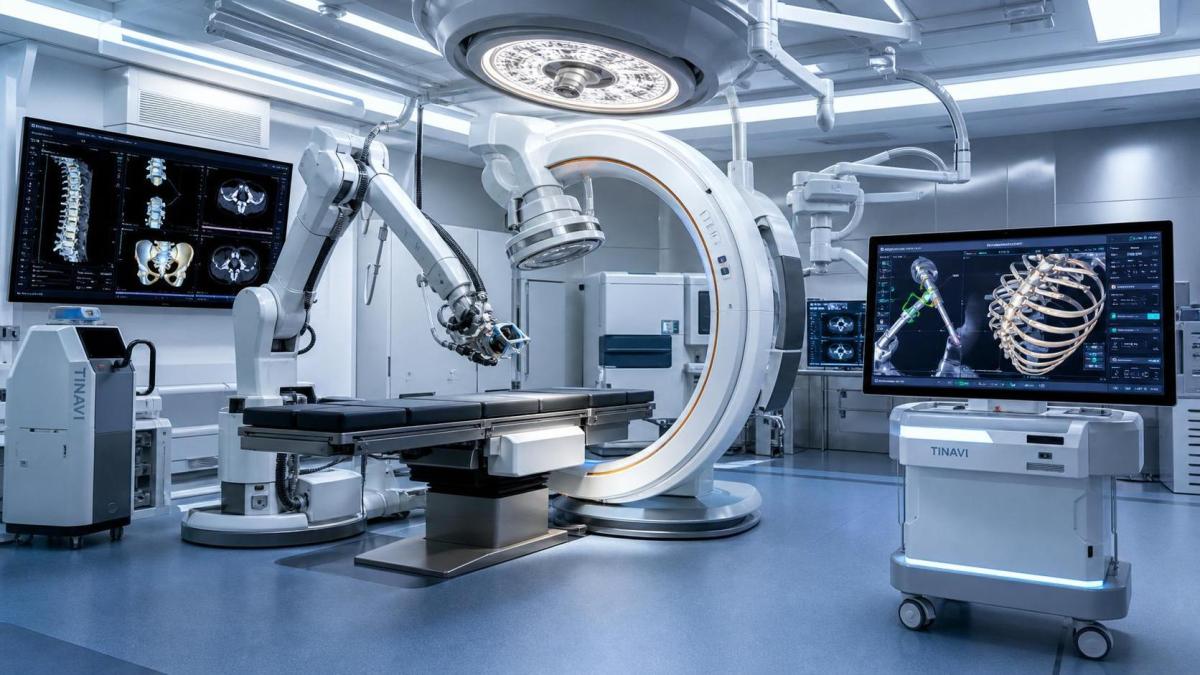
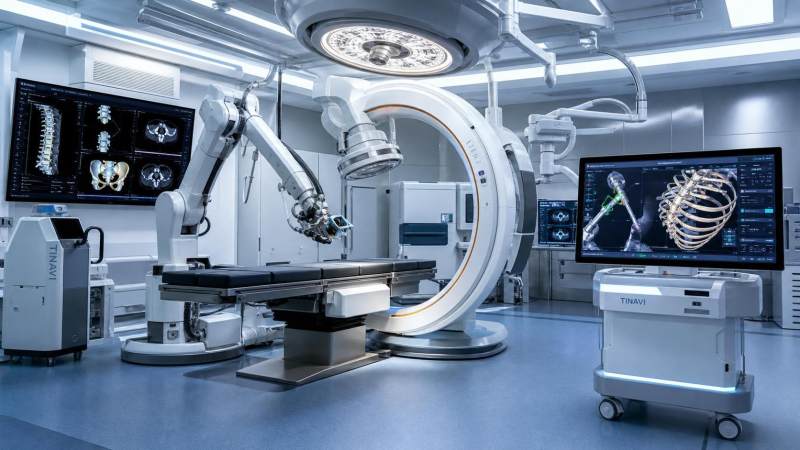
Perioperative robotic imaging refers to imaging support used before, during, and immediately after surgery to guide robotic or robot-assisted procedures.
Depending on the specialty, that may include CT, MRI, fluoroscopy, ultrasound, endoscopic video, optical tracking, 3D reconstruction, or fused image overlays.
The key point is context. A static preoperative scan helps planning, but it does not solve tissue shift, patient movement, or tool deviation during the procedure.
Perioperative robotic imaging becomes valuable when it closes that gap. It gives the robot, surgeon, or navigation layer a more current view of anatomy and instrument position.
In practice, this can mean trajectory planning in spine procedures, margin assessment in oncology, vessel localization in minimally invasive surgery, or implant alignment in orthopedics.
Why the industry is paying closer attention
Hospitals and technology suppliers are moving beyond headline claims about robotic precision. They are asking where precision comes from and how it is verified.
That shift explains the growing interest in perioperative robotic imaging. Robotic arms can reduce tremor and support repeatable motion, but they still depend on trustworthy spatial information.
At the same time, imaging systems are becoming more connected. PACS, surgical planning software, cloud data environments, and AI analysis tools are starting to feed the same procedural workflow.
For DMRS-covered markets, this creates a broader evaluation challenge. A surgical robot is no longer assessed in isolation. Imaging interoperability, software validation, and workflow friction now affect the buying decision.
Regulatory pressure also matters. When imaging guidance influences surgical action, system reliability, traceability, and software risk management become harder to ignore.
When surgical precision genuinely improves
Perioperative robotic imaging improves surgical precision when it changes decisions at the right moment, without slowing the procedure or introducing uncertain data.
High-value conditions
- Anatomy is complex, variable, or difficult to visualize directly.
- The procedure demands submillimeter accuracy or narrow safety margins.
- Tool position must be confirmed continuously or at several critical steps.
- Preoperative plans often need intraoperative adjustment.
- Image guidance can reduce revision risk, collateral damage, or implant misplacement.
These conditions are common in spine surgery, cranial procedures, orthopedic alignment, interventional oncology, and some advanced laparoscopic workflows.
The improvement is less convincing when imaging adds little new information. If anatomy is already exposed clearly, or if manual judgment remains dominant, the gain may be modest.
A useful test is simple: does perioperative robotic imaging reduce uncertainty at a moment that affects outcome quality? If the answer is no, the feature may be impressive but not decisive.
Procedure type changes the value equation
Not every specialty benefits in the same way. Technical value depends on how anatomy behaves and how much real-time feedback the procedure requires.
This is why cross-specialty marketing claims deserve caution. A system that performs well in rigid anatomy may offer weaker precision gains in deformable tissue environments.
The technical factors that decide performance
Perioperative robotic imaging succeeds or fails on a few technical fundamentals. These usually matter more than interface polish or headline feature counts.
Image quality and timing
Low-latency imaging matters when anatomy changes during manipulation. Delayed updates can create false confidence instead of precision.
Registration and calibration
If patient anatomy, instruments, and image coordinates are misaligned, the entire precision claim weakens. Small registration errors can produce large procedural consequences.
Interoperability
A strong platform should connect with PACS, planning workstations, navigation systems, and hospital data environments without manual workarounds.
Usability inside the sterile workflow
Even accurate imaging loses value if staff must pause repeatedly, re-register often, or navigate complex menus during critical steps.
Software trustworthiness
When AI-based segmentation, overlay generation, or planning suggestions are involved, validation history and failure visibility become essential.
Where business value becomes visible
The strongest case for perioperative robotic imaging is rarely limited to one metric. Precision gains matter, but they must connect to operational and economic outcomes.
Relevant signals include fewer revisions, more predictable implant placement, lower radiation exposure, better margin control, shorter learning curves, and stronger procedure standardization.
For exporters and developers, that means clinical value should be presented with workflow evidence, not only technical specifications.
For hospitals, the question is broader than capital cost. Integration burden, software updates, cybersecurity obligations, and training demands can reshape the return profile.
This is where DMRS-style analysis becomes useful. Precision claims should be read alongside compliance readiness, infrastructure fit, and long-term service requirements.
A practical evaluation framework
A grounded assessment of perioperative robotic imaging usually starts with five questions.
- Which surgical step becomes more accurate, and how is that measured?
- What data source drives guidance during the procedure?
- How often must calibration or registration be repeated?
- Which systems must integrate for full functionality?
- What happens when image quality, tracking, or software confidence drops?
Those questions expose whether the platform supports real surgical precision or mainly improves presentation.
It also helps to separate technical precision from organizational readiness. A capable imaging stack may still underperform if the site lacks data connectivity, training discipline, or maintenance support.
What to examine next before comparing systems
Before moving from interest to procurement or partnership review, it helps to document the target procedure, current pain points, imaging environment, and validation threshold.
Then compare perioperative robotic imaging systems on evidence quality, workflow compatibility, interoperability, service model, and regulatory documentation.
The most useful next step is not a broad feature checklist. It is a scenario-based review built around one or two procedures where precision has direct clinical and operational consequences.
That approach makes it easier to decide when perioperative robotic imaging is a meaningful surgical asset, when it is an infrastructure project, and when it is still ahead of practical need.
Recommended News
 Sep 09, 2026What drives minimally invasive surgery technology cost for hospitals?Minimally invasive surgery technology cost: uncover the key drivers—from total ownership and disposables to utilization, reimbursement, and ROI—for smarter hospital investment decisions.
 Aug 30, 2026How robotic surgery platforms affect operating room throughputRobotic surgery platforms can reshape operating room throughput. Explore practical ways to improve setup, docking, instrument flow, scheduling, and turnover reliability.
 Aug 28, 2026What drives the total cost of surgical robotics in the USA?Surgical robotics USA costs go beyond purchase price. Explore capital, consumables, service, training, IT integration, and volume factors for smarter hospital procurement.
 Aug 22, 2026How real-time control affects the safety of medical surgical robotsMedical surgical robots real time control directly impacts safety, precision, and fault response. Learn how deterministic timing protects tissue, supports surgeons, and reveals platform maturity.
 Aug 17, 2026How much does remote surgical systems USA cost for hospitals?Remote surgical systems USA cost for hospitals depends on robotics, networking, integration, training, and service. Discover key budget drivers and avoid hidden expenses before you buy.
 Aug 13, 2026China Surgical Robot Exports Up 330% in H1 2026China surgical robot exports surged 330% in H1 2026, signaling stronger compliance, supply-chain resilience, and access to Europe. Explore what this means for buyers, distributors, and regulated market entry.
 Aug 11, 2026Chinese Surgical Robots Gain Entry to U.S. and EuropeChinese surgical robots are entering the U.S. and Europe faster, with shorter certification cycles and new service-based models reshaping hospital access, distribution, and global market opportunities.
 Aug 10, 2026How to Evaluate a Medical Surgical Robots Supplier for Clinical Fit and Service RiskMedical surgical robots supplier selection requires more than feature checks. Learn how to assess clinical fit, service risk, integration, and long-term support for safer, smarter procurement.
 Aug 05, 2026How to Evaluate a CE Marked Robotic Surgery System for EU Market AccessCE marked robotic surgery system evaluation for EU market access: learn the key MDR, software, usability, clinical, and cybersecurity checks assessors use to spot risks fast.
 Jul 31, 2026How to Evaluate Integration Costs in a Medical Surgical Robot PlatformMedical surgical robot platform cost evaluation starts with integration, not purchase price. Learn how to assess interfaces, cybersecurity, workflow, training, and hidden operating costs before you buy.
 Jul 15, 2026Minimally Invasive Robotic Surgery Price: What Drives Total Procedure Cost?Minimally invasive robotic surgery price depends on more than the system quote. Learn the real cost drivers—tools, service, training, volume, and ROI.
 Jul 14, 2026Red Sea Disruption Extends Laparoscopic Robot Lead TimesRed Sea disruption extends laparoscopic robot lead times as Asia-Europe shipping tightens. See how booking delays, Q3 capacity pressure, and delivery risks may impact medical equipment supply.
 Jul 13, 2026Red Sea Diversions Lift Europe-Bound Freight, Raising Medical Robot Export CostsRed Sea diversions are lifting Europe-bound freight and raising medical robot export costs. See how Laparoscopic Robots and Orthopedic Nav-Robots face pricing, delivery, and FOB/CIF pressure.
 Jul 13, 2026Surgical Simulation Technology for Training: How to Compare Realism and ROISurgical simulation technology for training: compare realism, haptics, workflow fit, and ROI to choose a platform that improves skills, supports adoption, and delivers long-term value.
 Jul 12, 2026Medical Surgical Robot Platform Costs: What Drives ROI in 2026Medical surgical robot platform costs in 2026 go far beyond purchase price. Discover the key ROI drivers—utilization, service, downtime, and per-case costs—to make smarter procurement decisions.
 Jul 12, 2026How to Evaluate a Medical Surgical Robot Platform for Multi-Specialty UseMedical surgical robot platform evaluation starts with real multi-specialty needs. Learn how to compare workflow fit, integration, risk, and total cost for smarter purchasing.
 Jul 08, 2026Medical Surgical Robots in Singapore: Market Direction and Adoption BarriersMedical surgical robots Singapore is shifting from hype to selective adoption. Explore market direction, integration hurdles, training pressure, and where real hospital demand is growing.
![]() Jul 07, 2026EU Tightens MDR Transition for Laparoscopic RobotsLaparoscopic Robots face tougher EU MDR transition rules from Oct 1, 2026. Learn how the new CE audit on force feedback impacts cost, timelines, and market entry planning.
Jul 07, 2026EU Tightens MDR Transition for Laparoscopic RobotsLaparoscopic Robots face tougher EU MDR transition rules from Oct 1, 2026. Learn how the new CE audit on force feedback impacts cost, timelines, and market entry planning.![]() Jul 07, 2026Minimally Invasive Surgery Navigation: What Improves Accuracy in the OR?Minimally invasive surgery navigation improves OR accuracy through stable tracking, precise registration, low latency, and smooth workflow integration. Learn what truly drives safer, more confident surgical decisions.
Jul 07, 2026Minimally Invasive Surgery Navigation: What Improves Accuracy in the OR?Minimally invasive surgery navigation improves OR accuracy through stable tracking, precise registration, low latency, and smooth workflow integration. Learn what truly drives safer, more confident surgical decisions. Jul 06, 2026Surgical Robotics Training for Residents: A Practical Curriculum ChecklistSurgical robotics training for residents made practical: explore a checklist-driven curriculum covering simulation, live-case readiness, assessment, and workflow alignment for safer, smarter program growth.
 Jul 02, 2026Shanghai Port Delays Push Laparoscopic Robot Lead Times to 10-14 WeeksShanghai Port delays are pushing laparoscopic robot lead times to 10–14 weeks, raising freight costs and delivery risks. Learn what exporters, buyers, and distributors should do now.
 Jul 01, 2026EU Reclassifies Laparoscopic Robots as Class IIIEU reclassifies laparoscopic robots as Class III under MDR Annex XVI. Learn the October 2026 deadline, Class IIb resubmission impact, and key compliance actions for manufacturers.
 Jul 01, 2026Robotic Surgery Platforms: Cost Drivers, Service Terms, and ROI SignalsRobotic surgery platforms: understand true cost drivers, service terms, and ROI signals to compare vendors, reduce risk, and make smarter long-term hospital investment decisions.
 Jul 01, 2026Minimally Invasive Surgery Systems: Key Performance Metrics to CompareMinimally invasive surgery systems compared through key metrics like precision, visualization, stability, workflow, and total value—discover what truly matters before you buy.