Search News
Industry Portal
Popular Tags
EU Reclassifies Translumenal Robots as Class III
Author
Time
Click Count
On June 27, 2026, the European Commission adopted an amendment to MDR Annex XVI that brings translumenal robotic systems with active navigation or control into the Class III category. With the change set to take effect on October 1, 2026, manufacturers, distributors, importers, and regulatory teams involved in colonoscopy, bronchoscopy, and ureteroscopy robotic systems now face a more demanding EU market access path, making this a development worth close attention across product registration, clinical evidence planning, and commercial timelines.
What the amendment confirms
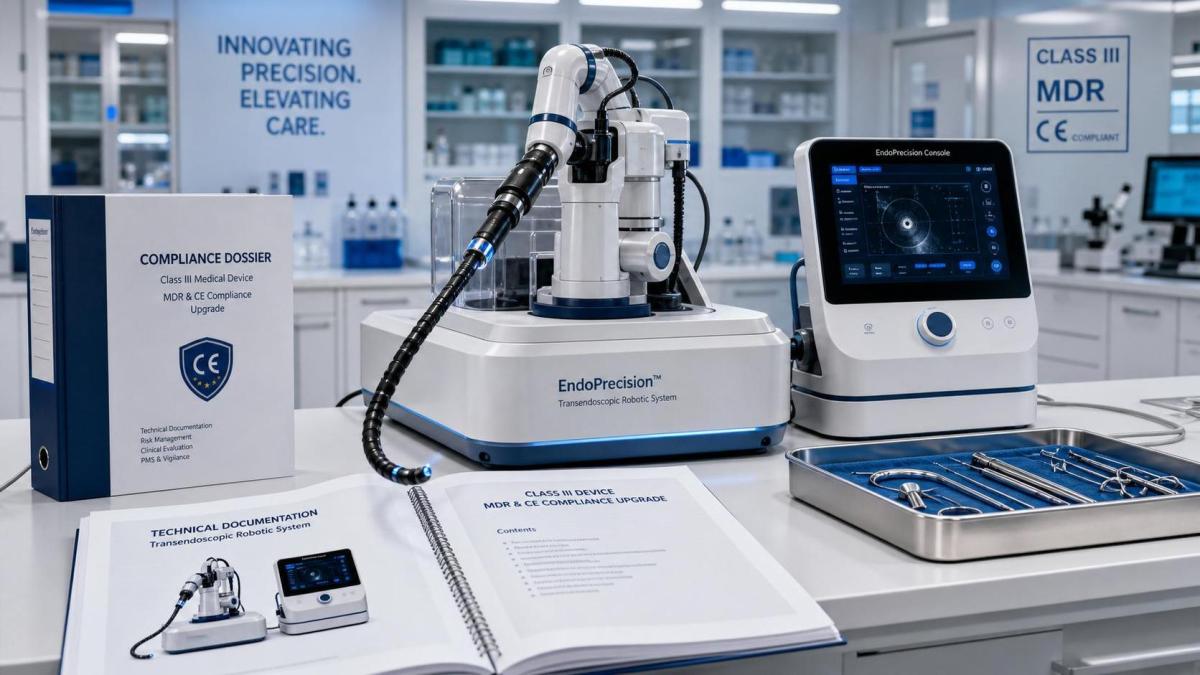
The confirmed change is that all translumenal robotic systems covered by the amendment to MDR Annex XVI will be treated as Class III medical devices. The examples provided in the event summary include colonoscopy, bronchoscopy, and ureteroscopy robots with active navigation or control.
The amendment was adopted on June 27, 2026, and becomes effective on October 1, 2026. From that date, the affected products will require full conformity assessment by an EU Notified Body.
The event summary also confirms that this assessment path includes clinical investigation data and post-market surveillance plans. It further states that the amendment raises regulatory barriers for non-EU manufacturers exporting translumenal robots to Europe and affects timelines, costs, and CE marking strategy for distributors and importers.
Where the pressure will be felt first
Manufacturers entering the EU market
From an industry perspective, manufacturers are likely to feel the impact most directly because the classification change affects the core route to CE marking. The practical pressure point is no longer only product positioning, but whether the evidence package, assessment planning, and documentation are sufficient for full Notified Body review under a Class III pathway.
Distributors and importers managing market access
Distributors and importers may be affected because the event summary explicitly links the amendment to CE marking strategy. In business terms, this can influence launch sequencing, portfolio decisions, and the timing of placing products on the EU market. What deserves closer attention is whether existing commercial expectations still match the new regulatory timeline.
Regulatory and compliance service providers
Service providers involved in registration, technical documentation, and post-market planning may also see immediate operational implications. Analysis shows that the required full conformity assessment, together with clinical investigation data and post-market surveillance planning, places greater weight on regulatory execution rather than simple document maintenance.
Procurement and end-use organizations
Hospitals, clinics, and procurement teams are not identified as direct regulatory subjects in the event summary, but they may still be affected through delivery schedules, product availability, and supplier readiness. Observably, the commercial consequences of a higher classification can reach the customer side through lead times and approval status rather than through procurement policy alone.
Issues companies should track now
Check exactly which products fall within the scope
The amendment refers to translumenal robotic systems, with examples including colonoscopy, bronchoscopy, and ureteroscopy robots with active navigation or control. Companies should focus on how their own products are described, positioned, and documented against that scope, because the regulatory path depends first on whether the device clearly falls within the amended category.
Rework CE marking timelines against the October 2026 date
Analysis shows that the effective date matters not only as a legal milestone but as a planning constraint. Teams responsible for EU entry, product launch, and channel commitments should compare current CE marking assumptions with the requirement for full Notified Body conformity assessment.
Prepare for evidence and post-market requirements
The event summary specifically mentions clinical investigation data and post-market surveillance plans. That means the discussion should not stay at the level of classification alone. What deserves closer attention is whether evidence generation, documentation structure, and post-market planning are already aligned with a Class III review expectation.
Align distributors, importers, and customers on delivery expectations
Because the summary directly notes effects on distributors and importers, commercial communication becomes a practical issue. Companies should pay attention to how regulatory timing may influence contracts, shipment planning, onboarding expectations, and conversations with EU-side partners about readiness and compliance status.
How this development is best understood
Analysis shows that this is more than a narrow wording update. It sets a clearer regulatory position for a defined group of robotic systems and links that position to a higher evidence and assessment burden. For companies already targeting Europe, the significance lies in the fact that the change has both a confirmed adoption date and a confirmed effective date, which turns regulatory interpretation into an immediate planning issue.
At the same time, it is more appropriate to understand this as both a concrete near-term change and a longer-term signal. The near-term change is the October 2026 compliance impact. The longer-term signal is that translumenal robotic systems entering Europe may now be assessed through a stricter regulatory lens, especially where active navigation or control is involved.
Observably, the most important question for the market is not whether the amendment exists, but how quickly companies can translate the new classification into workable evidence, submission, and market access strategies.
Why the industry should read this carefully
This development matters because it changes the regulatory threshold for translumenal robotic systems in Europe in a direct and operational way. It does not simply add another policy discussion point; it affects conformity assessment, clinical investigation expectations, post-market planning, and CE marking decisions tied to real commercial activity.
From an industry perspective, the news is best understood as an established regulatory change with immediate business planning consequences, rather than as a speculative policy signal. The broader market impact still requires observation, but the classification shift itself is already a concrete factor for any company exporting or preparing to export affected translumenal robots into the EU.
Basis of this article and what still needs verification
This article is based on the user-provided news title, event date, and event summary. The discussion above uses only the confirmed information supplied in that input and separates factual points from analysis and observation.
For this type of development, commonly relevant source categories may include official announcements, company statements, industry association updates, authoritative media coverage, and standards or regulatory documents. A specific official source link was not provided in the input, so the exact official reference should still be verified on an ongoing basis.
Further tracking should focus on any subsequent official wording, implementation details, and how market participants adjust CE marking, clinical investigation planning, and post-market surveillance preparation in response to the October 2026 effective date.
Recommended News
 Jun 30, 2026How to Evaluate a Translumenal Robots Manufacturer for Clinical ReadinessTranslumenal robots manufacturer evaluation starts with clinical readiness. Learn how to assess evidence, workflow fit, sterilization, software reliability, and regulatory strength before buying.
 Jun 29, 2026EU Reclassifies Translumenal Robots as Class IIIEU reclassifies translumenal robots as Class III under MDR Annex XVI. Learn how this shift impacts CE marking, clinical evidence, and EU market access before October 2026.
 Jun 18, 2026ASML Warning Signals Pressure on Medical AI Chip SupplyASML warning signals mounting pressure on medical AI chip supply, with EUV constraints potentially delaying SoCs for surgical robots. See what buyers, manufacturers, and supply teams should prepare for now.
 May 28, 2026Can surgical robotics lower complication risk in complex cases?Surgical robotics can lower complication risk in complex cases by improving precision, visibility, and workflow safety. Explore where it works best and what drives better outcomes.