Search News
Industry Portal
Popular Tags
ASML Warning Signals Pressure on Medical AI Chip Supply

Author
Time
Click Count
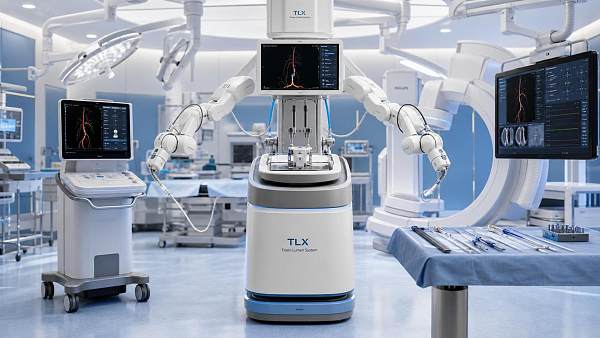
On 2026-06-17, remarks by ASML CEO Christophe Fouquet at VivaTech 2026 drew attention to a practical industry rule shift: supply availability and logistics capacity are becoming a de facto constraint on access to EUV-supported chip production for emerging semiconductor projects such as Terafab. For companies tied to advanced medical AI chips, especially those relying on ASML EUV lines for SoCs used in systems such as Translumenal Robots and Orthopedic Nav-Robots, this matters not simply as a production update but as a signal that delivery timing, procurement sequencing, and allocation priorities may face closer scrutiny over the next 12 to 18 months.

What Was Actually Stated on June 17
According to the provided event summary, Christophe Fouquet said at VivaTech 2026 that ASML is facing supply-chain constraints in key components and logistics when servicing EUV equipment demand for new semiconductor projects including Musk's Terafab. The statement indicates that, within the coming 12 to 18 months, high-end medical AI chips dependent on ASML EUV production lines may encounter longer lead times or adjustments in production-allocation priority. The examples provided in the input are SoCs used for Translumenal Robots and Orthopedic Nav-Robots.
Where the Pressure May Appear First in the Value Chain
Medical device chip buyers may need tighter delivery controls
From an industry perspective, developers and purchasing teams sourcing advanced medical AI chips may be affected because any delay or reprioritization at EUV-linked production stages can move directly into order scheduling and product launch coordination. What deserves closer attention is not only lead time, but also whether procurement documents, supply commitments, and acceptance milestones need to reflect a less certain delivery window.
Manufacturing and integration teams may face planning risk
For manufacturers and integrators using these SoCs in medical robotic systems, the impact may show up in assembly planning, inventory timing, and customer delivery coordination. Analysis shows that teams in this position should watch for changes in supplier allocation language, revised shipment schedules, and any documentation updates that affect production sequencing or qualification timing.
Supply-chain and logistics service providers may see stricter execution demands
Because the statement specifically referenced constraints in both key parts and logistics, supply-chain service providers may come under pressure to support tighter handoff, visibility, and contingency planning. Observably, this is relevant for service providers involved in transport coordination, delivery assurance, and traceability records tied to high-specification semiconductor inputs.
Compliance and documentation functions should not treat this as a pure capacity issue
Where advanced chips support regulated medical applications, delays can affect more than procurement alone. Companies responsible for technical files, bid materials, product specifications, or quality traceability may need to monitor whether delivery changes alter document validity periods, implementation schedules, or downstream service commitments. The current signal is operational rather than a new formal regulation, but it can still influence compliance execution in practice.
What Companies Should Watch Now
Check whether supplier commitments remain aligned with real capacity
Analysis shows that companies relying on EUV-linked medical AI chips should review current lead-time assumptions and compare them with contractual delivery language and supplier communications. If allocation priority becomes a live issue, commercial expectations and operational planning may diverge quickly.
Track changes in technical and tender documentation
What deserves closer attention is whether product specifications, bid submissions, technical schedules, or acceptance plans need revision if chip availability moves. Even without a published rule change in the input, execution standards can shift through updated delivery clauses and procurement documentation.
Prepare for closer scrutiny of traceability and after-sales timing
For businesses serving medical robotic applications, a delayed chip supply may affect installation timing, replacement planning, and service commitments. Companies should therefore keep traceability records, quality documents, and customer-facing delivery statements consistent with any updated supply outlook.
Continue monitoring formal follow-up language
The input does not provide detailed implementation rules, regulatory notices, or official allocation criteria. For that reason, companies should treat this as a developing execution signal and continue monitoring later statements, customer requirements, and procurement terms rather than assuming a fully defined new rule framework already exists.
Why This Looks More Like an Execution Signal Than a Settled Rule
Observably, the significance of this development lies in how supply constraints can begin to function like market rules even before any formal policy text appears. Analysis shows that the immediate issue is not the announcement of a new certification regime or published trade measure, but a practical tightening in the conditions under which advanced manufacturing capacity is accessed. It is more appropriate to understand this as an execution signal with possible compliance and delivery implications, rather than as a completed regulatory change.
From an industry perspective, continued attention is warranted because allocation changes at a critical equipment layer can later influence procurement terms, customer commitments, technical documentation, and even the timing of validation or deployment steps in regulated end uses. The rule impact, at this stage, is indirect but commercially relevant.
How the Market Should Read the Current Message
The current message should be read cautiously and concretely. Confirmed facts support the view that ASML sees supply-chain pressure in key components and logistics for EUV service to emerging projects, and that this may affect lead times or allocation priority for certain advanced medical AI chips over the next 12 to 18 months. Beyond that, further conclusions still require verification. It is more appropriate to view this development as an early operational warning for procurement, delivery, and documentation planning, rather than as proof of a finalized industry-wide rule outcome.
Basis of This Article and What Still Needs Verification
This article is generated from the user-provided news title, event date, and event summary. For developments of this kind, relevant source categories often include official company statements, regulatory releases, customs or trade authority information, industry association updates, standard-setting documents, and reporting by established business or technology media. A specific official source link was not provided in the input, so further verification remains necessary.
What still needs ongoing review includes any later formal wording, procurement or tender document changes, certification or compliance interpretation, customer-side execution requirements, industry feedback, and how companies actually adjust delivery and allocation practices in response to the supply-chain constraints described above.
Recommended News
 Jun 30, 2026How to Evaluate a Translumenal Robots Manufacturer for Clinical ReadinessTranslumenal robots manufacturer evaluation starts with clinical readiness. Learn how to assess evidence, workflow fit, sterilization, software reliability, and regulatory strength before buying.
 Jun 29, 2026EU Reclassifies Translumenal Robots as Class IIIEU reclassifies translumenal robots as Class III under MDR Annex XVI. Learn how this shift impacts CE marking, clinical evidence, and EU market access before October 2026.
 Jun 18, 2026ASML Warning Signals Pressure on Medical AI Chip SupplyASML warning signals mounting pressure on medical AI chip supply, with EUV constraints potentially delaying SoCs for surgical robots. See what buyers, manufacturers, and supply teams should prepare for now.
 May 28, 2026Can surgical robotics lower complication risk in complex cases?Surgical robotics can lower complication risk in complex cases by improving precision, visibility, and workflow safety. Explore where it works best and what drives better outcomes.