Search News
Industry Portal
Popular Tags
Chengdu Hosts 2026 Medical Robotics and Artificial Intelligence Conference

Author
Time
Click Count
The 2026 Medical Robotics and Artificial Intelligence Conference took place in Chengdu on October 23–24, 2026, presenting developments in clinical applications and the translation of research into practice. The reported surgical milestone, demonstration center designation and physician training make the event relevant to equipment suppliers, hospital procurement teams and clinical service providers. From an industry perspective, these developments warrant attention to training arrangements and delivery capabilities, although the supplied information does not establish any new regulation, certification requirement or procurement rule.
A surgical milestone and a new teaching designation
The conference showcased recent applications and translational achievements in medical robotics and medical artificial intelligence. It also announced a milestone of 5,000 patients served by da Vinci robotic surgery.
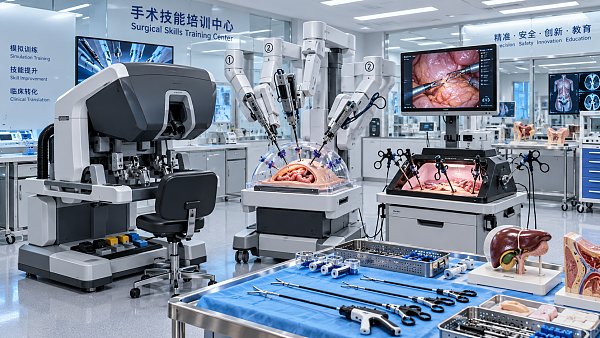
At the Robotic Minimally Invasive Center of Sichuan Provincial People's Hospital, the designation of “da Vinci Surgical Robot Advanced Demonstration Center for Clinical Surgical Training in Urology in China” was formally unveiled. The event also provided clinical training in robotic surgery for early- and mid-career physicians from across Sichuan.

Training capacity could become more relevant to equipment delivery
Hospital buyers may examine support alongside equipment specifications
Analysis suggests that the emphasis on clinical teaching could encourage hospital procurement teams to examine how a proposed robotic surgery system would be supported in practice. Relevant questions could include the scope of supplier training, arrangements for clinical familiarization and responsibilities after installation. These are potential procurement considerations; the supplied information does not confirm changes to purchasing criteria or tender documents.
The demonstration center designation may also attract attention during supplier evaluation. However, the announcement alone does not establish that the designation constitutes regulatory approval, a purchasing qualification or an authorization transferable to other institutions.
Suppliers and service providers may face more detailed delivery discussions
For surgical robot suppliers, equipment integrators and after-sales providers, the training activity may make the connection between equipment delivery and clinical support more visible. Analysis suggests that buyers could seek clearer descriptions of training deliverables, service coverage and the division of responsibilities between suppliers and hospitals.
Companies assessing this possibility could review whether their proposals accurately describe the support they can provide. Any additional obligations would need to be established through applicable requirements or agreed contracts; the conference report itself does not create them.
Medical AI suppliers need evidence specific to their applications
From an industry perspective, the conference's inclusion of medical artificial intelligence offers a reason to monitor how showcased applications progress toward practical use. However, the supplied summary identifies no particular AI product, approval, technical standard or purchasing arrangement. Suppliers therefore have no basis in this report alone to infer a new market access pathway or a change in compliance requirements.
What to verify before revising commercial plans
Confirm what the demonstration designation covers
As a practical recommendation, companies referring to the newly unveiled center could verify the designation's documented scope and any conditions attached to its use. Marketing materials and procurement submissions should describe only what supporting documentation establishes. The supplied information does not specify the designation's assessment criteria, duration or relationship to any certification process.
Define training commitments in proposals and contracts
Suppliers and hospital buyers could assess whether proposed training arrangements clearly identify the intended participants, subject matter and respective responsibilities. This recommendation follows from the event's emphasis on physician training. It should not be interpreted as evidence that a standardized training requirement has been introduced.
Where training forms part of a delivery proposal, parties could also check that schedules and available support match the commitments being offered. The summary provides no training timetable, assessment procedure or contractual delivery conditions.
Use the reported milestone within its evidential limits
Companies considering references to the 5,000-patient milestone could check the supporting material before using it in technical submissions or promotional claims. The supplied report establishes the announced patient milestone, but provides no clinical outcome measures or comparative performance data. Analysis therefore supports treating it as a reported measure of clinical activity, without extending it into claims about treatment superiority or procurement eligibility.
A clinical implementation signal with limited regulatory implications
Editorial analysis suggests that the conference is best understood as a signal of attention to clinical application and physician training. The demonstration center and training activity provide a basis for examining how surgical robotics capabilities are developed and supported. They do not, on the available information, demonstrate a change in binding industry rules.
Further documentation could affect that assessment. Relevant developments to watch include clarification of the center's teaching scope, any published training arrangements and any subsequent procurement documents that explicitly refer to related capabilities. Such developments remain matters for verification rather than confirmed outcomes of this event.
Commercial decisions should follow documented requirements
For industry participants, the immediate analytical takeaway is to assess training and service readiness alongside equipment capabilities. The event may inform discussions about supplier support and clinical implementation, but it provides no confirmed basis for changing certification assumptions, trade procedures or mandatory delivery requirements. Procurement and commercial decisions should be guided by verified documentation and the terms applicable to each project.
The supplied event account and points requiring follow-up
This article is based solely on the user-provided news title, event dates and event summary. No specific official source links were included in the input, and the reported details require continued verification against primary documentation.
Potential verification materials include organizer announcements, hospital notices and original documents concerning the demonstration center and physician training. These are source categories for follow-up, not additional sources consulted for this article. Subsequent monitoring should focus on any published policy details, clarification of certification status, changes to tender requirements, implementation arrangements and feedback from participating institutions and suppliers.
Recommended News
 Oct 26, 2026Onslow Memorial Hospital Introduces da Vinci 5 Surgical SystemOnslow Memorial Hospital introduces the da Vinci 5 surgical system for minimally invasive surgery across four specialties. Explore its advanced features and potential impact on local care.
 Oct 25, 2026Chengdu Hosts 2026 Medical Robotics and Artificial Intelligence ConferenceExplore Chengdu’s 2026 Medical Robotics and Artificial Intelligence Conference, highlighting surgical milestones, physician training and insights for hospital buyers and suppliers.
 Oct 24, 2026Beijing Leads Nationwide With 45 Surgical Robot Registration CertificatesBeijing leads China with 45 surgical robot registration certificates. Explore clinical adoption trends and key checks for manufacturers, hospital buyers and service providers.
 Oct 21, 2026Intuitive Surgical Agrees to $450 Million Settlement in da Vinci Antitrust LawsuitIntuitive Surgical’s $450 million da Vinci antitrust settlement puts repair access in focus. Explore the financial impact and key questions for hospitals and independent repair providers.
 Oct 17, 2026How to evaluate surgical robotic systems for laparoscopic proceduresSee which essential factors evaluating surgical robotic systems should address, from safety and clinical evidence to workflow and costs. Choose confidently for laparoscopic care.
 Oct 06, 2026When does robotic surgery for urology justify its higher capital cost?Robotic surgery for urology: discover when higher capital costs deliver value through utilization, clinical outcomes, reimbursement, and strategy.
 Oct 07, 2026What Does an Ottava Robotic Surgery System Cost Compared With Similar Platforms?What is the initial investment cost for purchasing an Ottava minimally invasive robotic surgery system, and how does it compare to similar systems on the market? Explore total ownership costs, utilization, and procurement factors.
 Oct 01, 2026Can Surgical Simulation Reduce Training Costs for New Surgeons?Can surgical simulation reduce training costs for new surgeons? Discover how simulation improves readiness, standardizes skills, and optimizes operating-room time.
 Sep 14, 2026How to compare robotic surgery platform vendors for hospital adoptionCompare robotic surgery platform vendors with a practical hospital guide covering clinical fit, workflow, total cost, training, IT security, and long-term support.
 Sep 09, 2026What drives minimally invasive surgery technology cost for hospitals?Minimally invasive surgery technology cost: uncover the key drivers—from total ownership and disposables to utilization, reimbursement, and ROI—for smarter hospital investment decisions.
 Aug 30, 2026How robotic surgery platforms affect operating room throughputRobotic surgery platforms can reshape operating room throughput. Explore practical ways to improve setup, docking, instrument flow, scheduling, and turnover reliability.
 Aug 28, 2026What drives the total cost of surgical robotics in the USA?Surgical robotics USA costs go beyond purchase price. Explore capital, consumables, service, training, IT integration, and volume factors for smarter hospital procurement.
 Aug 22, 2026How real-time control affects the safety of medical surgical robotsMedical surgical robots real time control directly impacts safety, precision, and fault response. Learn how deterministic timing protects tissue, supports surgeons, and reveals platform maturity.
 Aug 17, 2026How much does remote surgical systems USA cost for hospitals?Remote surgical systems USA cost for hospitals depends on robotics, networking, integration, training, and service. Discover key budget drivers and avoid hidden expenses before you buy.
 Aug 13, 2026China Surgical Robot Exports Up 330% in H1 2026China surgical robot exports surged 330% in H1 2026, signaling stronger compliance, supply-chain resilience, and access to Europe. Explore what this means for buyers, distributors, and regulated market entry.
 Aug 11, 2026Chinese Surgical Robots Gain Entry to U.S. and EuropeChinese surgical robots are entering the U.S. and Europe faster, with shorter certification cycles and new service-based models reshaping hospital access, distribution, and global market opportunities.
 Aug 10, 2026How to Evaluate a Medical Surgical Robots Supplier for Clinical Fit and Service RiskMedical surgical robots supplier selection requires more than feature checks. Learn how to assess clinical fit, service risk, integration, and long-term support for safer, smarter procurement.
 Aug 05, 2026How to Evaluate a CE Marked Robotic Surgery System for EU Market AccessCE marked robotic surgery system evaluation for EU market access: learn the key MDR, software, usability, clinical, and cybersecurity checks assessors use to spot risks fast.
 Jul 31, 2026How to Evaluate Integration Costs in a Medical Surgical Robot PlatformMedical surgical robot platform cost evaluation starts with integration, not purchase price. Learn how to assess interfaces, cybersecurity, workflow, training, and hidden operating costs before you buy.
 Jul 15, 2026Minimally Invasive Robotic Surgery Price: What Drives Total Procedure Cost?Minimally invasive robotic surgery price depends on more than the system quote. Learn the real cost drivers—tools, service, training, volume, and ROI.
 Jul 14, 2026Red Sea Disruption Extends Laparoscopic Robot Lead TimesRed Sea disruption extends laparoscopic robot lead times as Asia-Europe shipping tightens. See how booking delays, Q3 capacity pressure, and delivery risks may impact medical equipment supply.
 Jul 13, 2026Red Sea Diversions Lift Europe-Bound Freight, Raising Medical Robot Export CostsRed Sea diversions are lifting Europe-bound freight and raising medical robot export costs. See how Laparoscopic Robots and Orthopedic Nav-Robots face pricing, delivery, and FOB/CIF pressure.
 Jul 13, 2026Surgical Simulation Technology for Training: How to Compare Realism and ROISurgical simulation technology for training: compare realism, haptics, workflow fit, and ROI to choose a platform that improves skills, supports adoption, and delivers long-term value.
 Jul 12, 2026Medical Surgical Robot Platform Costs: What Drives ROI in 2026Medical surgical robot platform costs in 2026 go far beyond purchase price. Discover the key ROI drivers—utilization, service, downtime, and per-case costs—to make smarter procurement decisions.