Search News
Industry Portal
Popular Tags
EHA 2026 Highlights AI-Driven Hematology Diagnostics
Author
Time
Click Count
At the European Hematology Association (EHA) meeting that opened on June 15, 2026, Hengrui Pharma presented multiple clinical data updates in hematology, with particular attention on zemeituostat, an EZH2 inhibitor linked to a companion diagnostic AI model. The disclosed progress matters not only to drug developers, but also to imaging AI vendors, pathology workflow teams, radiology-facing service providers, and companies planning cross-border deployment of Radiology AI Screening products, because it points to a more concrete validation path between China-developed hematology imaging AI tools and European clinical workflows.
What Was Confirmed at EHA 2026
According to the provided event summary, Hengrui Pharma showcased multiple hematology drug clinical data sets at EHA 2026. Among them was zemeituostat, described as an EZH2 inhibitor.
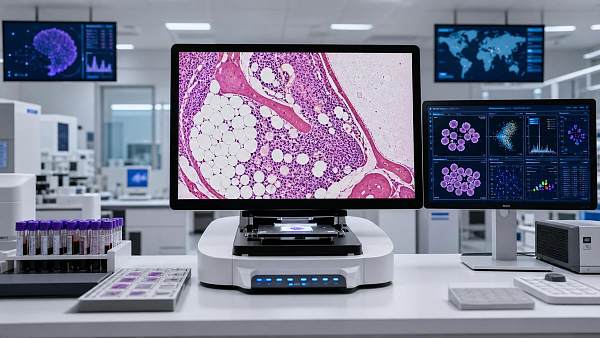
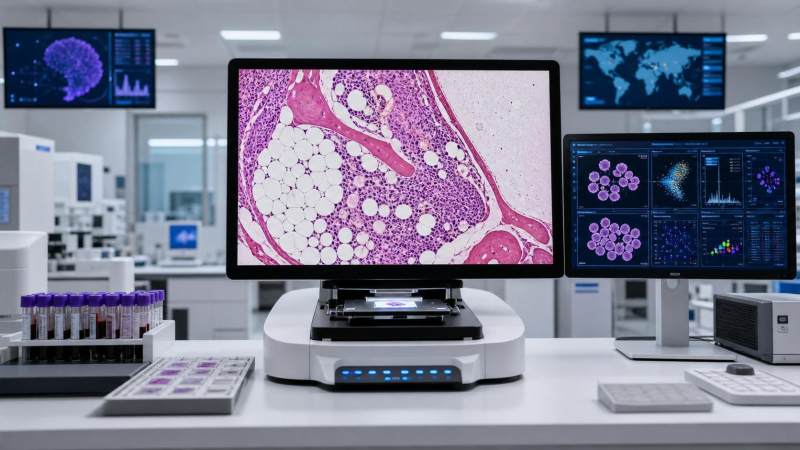
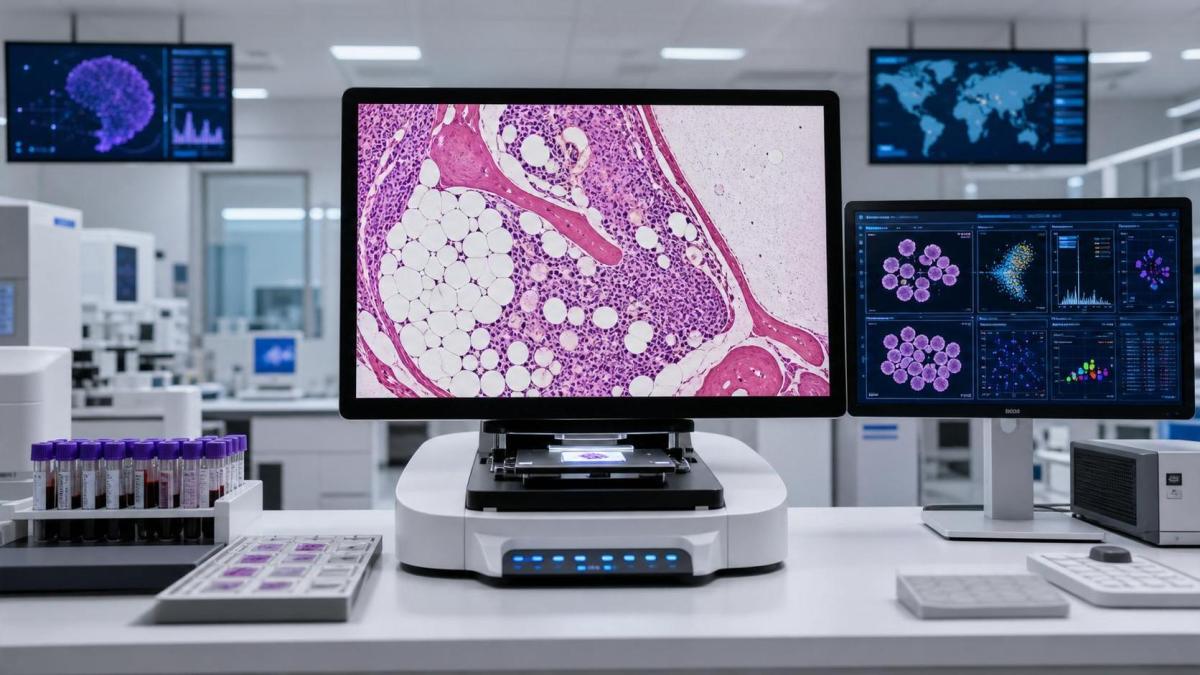
The same summary states that its companion diagnostic AI model has been connected to a multicenter imaging analysis platform. The model supports automatic grading of bone marrow biopsy images and prediction of treatment response.
The disclosed development also indicates a faster integration and validation path between China’s AI-assisted hematologic imaging interpretation systems and European radiology workflows. In the event summary, this is presented as real-world clinical evidence support for overseas expansion of Radiology AI Screening products.
Why the Signal Extends Beyond a Single Drug Update
For drug developers, companion diagnostics move closer to workflow integration
From an industry perspective, this development may affect pharmaceutical companies working on targeted therapies and companion diagnostics. The relevant business impact is not limited to clinical efficacy communication; it also touches how diagnostic tools are embedded into multicenter analysis platforms and how treatment response assessment may be operationalized in practice.
What deserves closer attention is whether future product communication, market access preparation, and clinician engagement increasingly need to address both the therapy and the diagnostic workflow as a combined value proposition.
For imaging AI and diagnostic software providers, validation expectations become more practical
Analysis shows that vendors developing AI-based screening or image interpretation tools may be affected because the disclosed progress links algorithm capability with multicenter clinical use and cross-regional workflow validation. The key business implications are likely to center on model integration, evidence presentation, and alignment with hospital-side reading processes.
These companies should watch how clinical evidence is framed in relation to automated grading, response prediction, and workflow compatibility rather than treating algorithm performance as a standalone commercial message.
For service and delivery teams, cross-border implementation becomes a documentation issue as much as a technical one
Service providers involved in deployment, system integration, and clinical delivery may also be affected. Observably, the issue is not only whether a model can run on a platform, but whether its output can be understood, reviewed, and used within established radiology-related routines.
The practical impact may appear in implementation planning, platform interfacing, clinical communication materials, and evidence packages prepared for customers or institutional partners in overseas markets.
What Companies Should Track Next
Watch for how official language evolves
Analysis shows that companies should pay close attention to future official wording around companion diagnostics, multicenter platform access, and workflow integration. Small changes in phrasing can matter because they shape how stakeholders interpret clinical readiness versus exploratory validation.
Separate evidence support from market readiness
What deserves closer attention is the distinction between real-world clinical evidence support and full commercial readiness in overseas markets. The event summary supports the former, but companies should avoid treating that signal as a completed market-entry outcome.
Prepare materials around workflow fit, not only model function
For teams in product, regulatory communication, business development, and delivery, a practical priority is to organize materials that explain how image grading and treatment response prediction fit into existing clinical processes. In this context, workflow compatibility may be as important as model capability.
Review partner and delivery preparedness early
Companies working with external suppliers, integration partners, or institutional customers should also review qualification documents, technical interface materials, and delivery-cycle assumptions. Observably, cross-border clinical technology projects often depend on whether supporting documentation can keep pace with technical progress.
How This News Is Best Understood Now
In editorial observation, this news is better understood as a meaningful industry signal rather than a final market conclusion. The confirmed facts point to a narrowing gap between innovative hematology drugs, companion diagnostic AI, and multicenter imaging workflows, but they do not on their own prove that broad clinical adoption or cross-market commercialization has already been achieved.
Analysis also suggests that the most relevant takeaway is the growing importance of evidence that connects AI output with real clinical processes. That is especially relevant for companies positioning Radiology AI Screening products for overseas use, where interoperability and workflow acceptance may shape commercial progress as much as technical performance.
A Measured Industry Takeaway
This development is worth following because it ties together three areas often discussed separately: innovative hematology drugs, AI-supported diagnostic interpretation, and international clinical workflow validation. Based on the provided information, the clearest significance is that real-world clinical evidence is becoming a more central part of how AI-enabled diagnostic products may support overseas expansion.
It is more appropriate to understand this as an early but concrete directional signal. The event does not settle long-term outcomes, but it does give the industry a clearer reference point for what cross-border validation may need to look like in practice.
Basis of This Article
This article is based on the user-provided news title, event date, and event summary related to EHA 2026, Hengrui Pharma, zemeituostat, and the integration of a companion diagnostic AI model into a multicenter imaging analysis platform.
For this type of industry update, commonly relevant source categories may include official conference releases, company announcements, industry association materials, authoritative media reporting, and standard-setting documents. A specific official source link was not provided in the input, so the underlying details still require ongoing verification against future public disclosures.
Further observation should focus on any subsequent official statements regarding clinical validation scope, workflow integration details, and how real-world evidence is described in connection with Radiology AI Screening expansion into overseas markets.
Recommended News
 Sep 02, 2026How low-latency medical AI enables real-time radiology screeningLow latency medical AI enables real-time radiology screening with faster triage, seamless PACS integration, secure workflows, and human-led clinical decisions.
 Aug 02, 2026How AI Radiology Workflow Integration Affects Turnaround Time and PACS CompatibilityAI radiology workflow integration directly shapes turnaround time and PACS compatibility. Learn what to verify in routing, worklists, viewer output, and reporting before deployment.
 Jul 21, 2026How to Evaluate AI Medical Imaging for Lesion Detection AccuracyAI medical imaging for lesion detection: learn how to evaluate accuracy beyond sensitivity, compare validation quality, workflow fit, and real-world reliability before choosing a solution.
 Jul 12, 2026Medical Imaging Analytics Tools for Faster Triage and Follow-UpMedical imaging analytics tools help hospitals speed triage, improve follow-up, and reduce workflow delays with smarter integration, alerts, and scenario-based deployment insights.
 Jul 10, 2026AI Clinical Workflow for Imaging Centers: 7 Metrics That Matter in Daily UseAI clinical workflow for imaging centers becomes easier to evaluate with 7 daily metrics that reveal real gains in speed, triage, reporting, integration, and staff adoption.
 Jul 09, 2026Medical Imaging Analytics Tools for Faster Reporting WorkflowsMedical imaging analytics tools help radiology teams speed reporting, improve triage, and strengthen structured workflows. Explore key benefits, integration factors, and real business value.
![]() Jul 07, 2026AI Radiology Integration Platform Checklist for PACS and Workflow FitAI radiology integration platform checklist for PACS, workflow, security, and scalability. Learn what hospitals should test before buying to reduce risk and improve adoption.
Jul 07, 2026AI Radiology Integration Platform Checklist for PACS and Workflow FitAI radiology integration platform checklist for PACS, workflow, security, and scalability. Learn what hospitals should test before buying to reduce risk and improve adoption. Jul 04, 2026AI Radiology Integration: PACS Workflow Risks and FixesAI radiology integration explained: uncover PACS workflow risks, routing gaps, metadata issues, and practical fixes to improve speed, compliance, and scalable imaging operations.
 Jul 03, 2026AI Medical Imaging Vendor Checklist for Accuracy, Workflow, and IntegrationAI medical imaging vendor checklist for buyers: compare clinical accuracy, workflow fit, PACS/RIS/HIS integration, security, and support to choose a safer, scalable solution.
 Jul 01, 2026AI Radiology Integration for Hospitals: What to Check Before Go-LiveAI radiology integration for hospitals: learn the critical go-live checks for workflow, PACS/RIS connectivity, validation, security, and user adoption to reduce risk and improve results.
 Jun 29, 2026FDA Tightens Validation Bar for Radiology AI SaMDFDA Tightens Validation Bar for Radiology AI SaMD: learn how the new FDA checklist affects 510(k), De Novo filings, clinical validation, timelines, and U.S. market access.
 Jun 27, 2026AI Radiology Workflow Efficiency: What Actually Improves TurnaroundAI radiology workflow efficiency improves when bottlenecks are removed. Discover practical ways to speed turnaround through triage, smart routing, and safer reporting workflows.
 Jun 26, 2026Medical Imaging Analytics Tools for Faster DiagnosisMedical imaging analytics tools help speed diagnosis by improving triage, measurement consistency, and workflow integration. Learn how to choose the right fit for faster, safer clinical decisions.
 Jun 25, 2026AI Diagnostic Decision Support: When It Helps and When It MisleadsAI diagnostic decision support can speed triage, improve consistency, and support clinicians—but it can also mislead. Discover where it adds real value, the risks to watch, and how to evaluate safe deployment.
 Jun 23, 2026FDA and MHRA Open Joint AI SaMD Pathway for Radiology ScreeningFDA and MHRA launch a joint AI SaMD pathway for Radiology AI Screening, cutting review time by up to 40%. See what it means for approvals, data reuse, and faster US-UK market entry.
 Jun 22, 2026FDA-MHRA Pilot Opens Faster Path for Radiology AIFDA-MHRA pilot opens a faster path for Radiology AI, helping AI/ML SaMD developers reduce duplicate validation, align PCCP, and speed US-UK market access.
 Jun 21, 2026AI Radiology Platform: Key Accuracy Metrics That Matter in ScreeningAI radiology platform buyers: learn which screening accuracy metrics truly matter, from sensitivity and specificity to PPV, NPV, and false positive burden.
 Jun 18, 2026SK hynix Ships HBM4E Samples Early for Medical AISK hynix Ships HBM4E Samples Early for Medical AI: explore how faster HBM4E readiness could accelerate radiology AI, digital pathology, and cloud PACS/VNA planning.
 Jun 16, 2026EHA 2026 Highlights AI-Driven Hematology DiagnosticsEHA 2026 highlights AI-driven hematology diagnostics as Hengrui Pharma links zemeituostat with companion diagnostic AI, signaling real-world validation and cross-border workflow potential worth watching.
 May 28, 2026AI diagnostics works best when false positives are kept in checkAI diagnostics works best when false positives are controlled. Learn how quality and safety teams can improve precision, protect patients, and deploy smarter clinical AI with confidence.