Search News
Industry Portal
Popular Tags
Connected Digital Health Trends Reshaping Care Delivery
Author
Time
Click Count
Connected digital health is no longer a future concept in healthcare strategy. It is becoming the operating layer that links diagnostics, treatment, monitoring, rehabilitation, and data-driven decision-making across clinical and home-based settings.
What makes this shift notable is not only the technology itself. The real change comes from how connected digital health combines software, devices, networks, and workflows into more continuous care delivery.
That matters across a broad industry landscape. Hospitals need interoperable systems, digital health companies need scalable models, and medical technology providers need solutions that fit clinical reality, compliance, and patient safety.
Why connected digital health is becoming a care delivery priority
Healthcare systems are under pressure to improve efficiency without weakening quality. At the same time, patient journeys are becoming more distributed, moving between hospital departments, outpatient sites, rehabilitation centers, and the home.
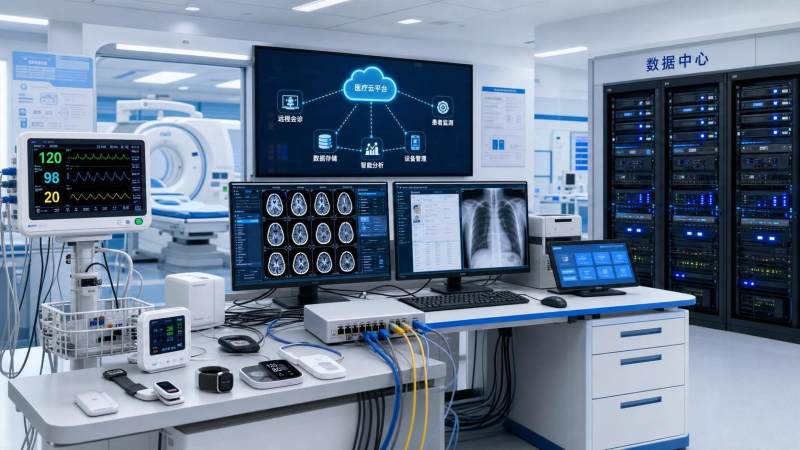
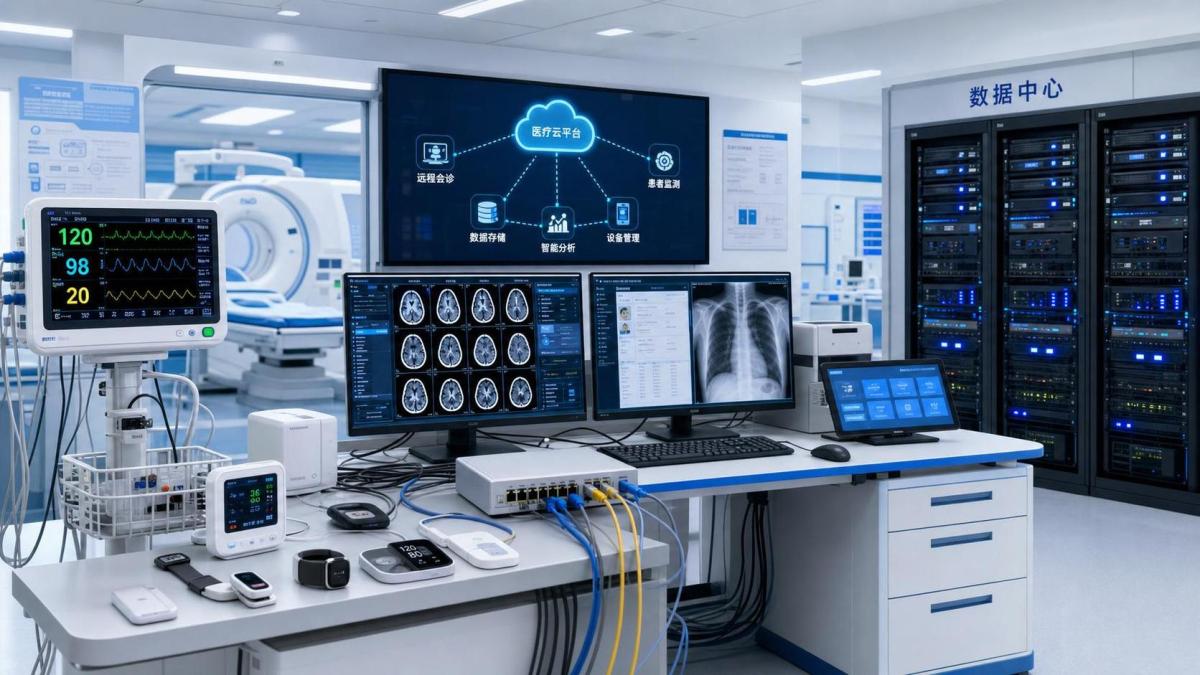
Connected digital health addresses this fragmentation. It links clinical data, smart devices, imaging systems, telemedicine platforms, and remote monitoring tools so that care teams can respond faster and with more context.
This is one reason the topic now sits at the center of technology planning. It affects surgical precision, chronic disease management, hospital infrastructure, and post-acute recovery, not just a single application area.
In practice, organizations are paying closer attention to whether digital systems can work together, whether data is usable in real workflows, and whether technology improves clinical decisions rather than adding complexity.
What connected digital health really includes
The term covers more than wearables or telehealth. Connected digital health includes the full network of devices, software, data platforms, and communication layers that support care before, during, and after treatment.
A connected environment may include AI-assisted imaging, robotic-assisted surgery systems, hospital information systems, PACS platforms, cloud medical records, and remote biosensor-based monitoring.
It also includes rehabilitation technologies, such as motion tracking, smart therapy devices, and data-led recovery management. In some cases, advanced categories like brain-computer interfaces or hyperbaric therapy equipment also become part of the connected care architecture.
What ties these elements together is interoperability. Without secure data exchange and workflow integration, even strong standalone tools remain isolated assets rather than part of connected digital health.
A practical way to view the ecosystem
The trends reshaping care delivery now
Several trends are driving the current phase of connected digital health. They are not moving independently. Their impact comes from how they reinforce one another across the care pathway.
AI is moving closer to routine workflow
AI in radiology, pathology, and clinical software is shifting from experimental value to workflow support. The key question is no longer whether algorithms can detect patterns, but whether outputs are reliable, explainable, and usable in context.
This is especially relevant in connected digital health, where AI output may influence triage, image review, monitoring alerts, and longitudinal care planning.
Remote monitoring is becoming operational, not optional
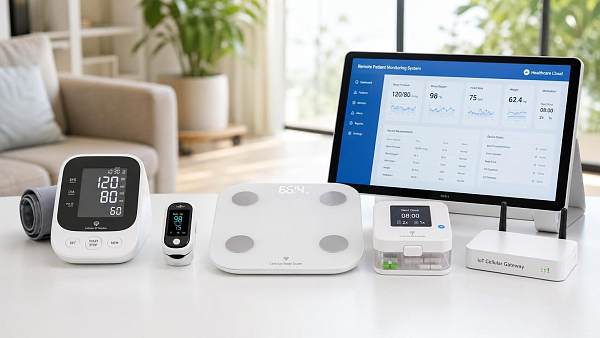
Remote patient monitoring now plays a larger role in managing cardiac conditions, diabetes, rehabilitation progress, and post-discharge follow-up. Connected digital health makes these programs scalable by integrating sensor data with telemedicine and clinical review processes.
The value is strongest when data does not just accumulate. It must trigger usable insights, threshold-based alerts, and documented next steps.
Digital infrastructure is becoming strategic
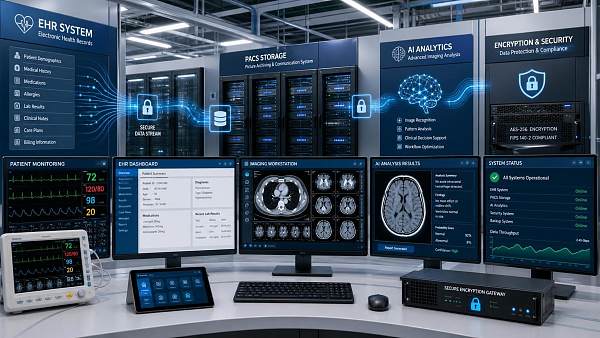
Hospitals increasingly recognize that fragmented IT environments limit innovation. Connected digital health depends on infrastructure that can securely connect HIS, PACS, cloud platforms, device data, and third-party software.
That is why data architecture, cybersecurity, and integration planning now influence procurement and transformation decisions as much as device performance.
Robotics and smart therapy are expanding the care continuum
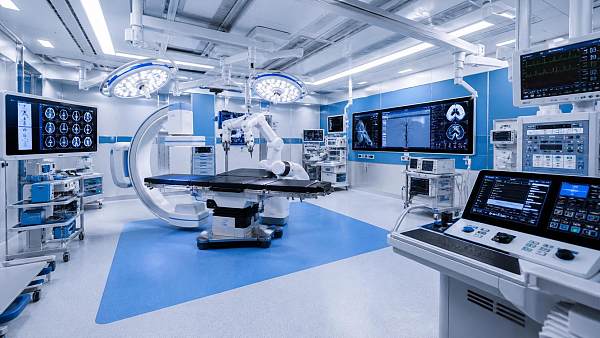
Surgical robotics once appeared limited to advanced procedure rooms. Today, connected digital health places robotics within a broader digital care model that also includes imaging support, training data, postoperative tracking, and quality review.
A similar pattern is visible in rehabilitation, where connected devices can capture motion data, therapy adherence, and progress metrics that support more adaptive recovery programs.
Where business value appears in real settings
Connected digital health creates value differently depending on the setting. In acute care, speed and coordination often matter most. In long-term management, the priority may be continuity, compliance, and earlier intervention.
- In hospitals, integrated imaging, records, and AI can shorten review time and reduce workflow friction.
- In surgery, connected robotics and imaging data can support precision, documentation, and procedural consistency.
- In outpatient care, telemedicine and connected devices can reduce unnecessary visits while preserving visibility.
- In rehabilitation, data tracking can reveal whether therapy plans are producing measurable progress.
- In home-based care, remote monitoring can support earlier response to deterioration or non-adherence.
For the broader market, this also changes how solutions are evaluated. Buyers and partners increasingly compare not only hardware specifications, but also interoperability, software lifecycle management, compliance readiness, and evidence of clinical fit.
This wider perspective is important in sectors covered by DMRS, where robotics, AI software, connected devices, and digital infrastructure are converging into shared procurement and strategy discussions.
How to assess connected digital health more effectively
The strongest connected digital health programs are rarely built around a single device or platform. They are usually shaped by a practical assessment of workflow needs, data pathways, compliance requirements, and measurable outcomes.
A useful evaluation framework often includes the following points.
- Check whether the solution integrates with existing records, imaging systems, and operational software.
- Review data quality, biosensor accuracy, alert logic, and the risk of unusable signal noise.
- Examine regulatory fit, especially for SaMD, patient data protection, and auditability.
- Look for evidence that the technology supports real clinical decisions, not just dashboard visibility.
- Compare business models carefully, including SaaS subscriptions, service support, and pay-per-procedure structures.
More importantly, connected digital health should be judged over the full care pathway. A system may perform well in one department but still fail if it cannot support handoffs, follow-up, or secure data continuity.
What to watch next
The next stage of connected digital health will likely be defined by deeper interoperability, stronger governance, and more outcome-linked adoption. Interest is shifting from isolated innovation to connected performance.
That means closer scrutiny of AI transparency, cybersecurity posture, device connectivity standards, and the ability to translate data into action across hospital and out-of-hospital care.
For anyone tracking the sector, a useful next step is to map technologies against actual care pathways rather than product categories alone. That approach makes it easier to compare solutions, identify integration gaps, and understand where connected digital health can deliver durable clinical and operational value.
As care delivery becomes more distributed and data-dependent, the organizations that make better decisions will be the ones that connect technology choices to workflow reality, patient safety, and long-term system readiness.
- digital health
- SaMD
- remote patient monitoring
- brain-computer interfaces
- surgical robotics
- AI diagnostics
- telemedicine platforms
- pathology AI
- Chronic disease management
- Robotic-assisted surgery
- Telemedicine
- Hospital Information Systems
- robotic-assisted surgery systems
- hyperbaric therapy equipment
- connected digital health
Recommended News
 Aug 19, 2026When is an NB-IoT healthcare platform the right fit for remote patient monitoringNB-IoT healthcare platform: learn when it is the best fit for remote patient monitoring, from battery life and coverage to workflow, integration, and clinical reliability.
 Aug 14, 2026What Drives Intelligent Operating Room Pricing in Hospital Projects?Intelligent operating room pricing depends on integration, imaging, robotics, software, compliance, and service. Learn the key cost drivers to compare suppliers smarter and reduce project risk.
 Aug 13, 2026How medtech case promotion affects case conversion rates in B2B salesmedtech case promotion can boost B2B sales conversion by building trust, proving value, and reducing buyer risk. Discover how to turn case studies into qualified leads.
 Aug 03, 2026How Hospitals Can Evaluate Medical Data Analytics Tools for ROI and Workflow ImpactMedical data analytics for hospitals starts with workflow problems, not flashy dashboards. Learn how to evaluate ROI, data access, compliance, and real-world adoption before you buy.
 Aug 01, 2026What Drives Medical Data Analytics Pricing Across EHR, PACS, and AI Workflows?Medical data analytics pricing explained: compare EHR, PACS, and AI workflow costs, uncover hidden integration, compliance, and support fees, and choose vendors with confidence.
 Jul 28, 2026Medical Device Investment Valuation: Key Risk and ROI DriversMedical device investment valuation explained: uncover the key regulatory, reimbursement, adoption, and scalability risks that shape ROI, helping investors make smarter, faster deal decisions.
 Jul 26, 2026Medical Device Investment in Europe: Risks, Returns, and 2026 Market SignalsMedical device investment Europe in 2026 is shifting toward regulation-ready, workflow-fit medtech. Explore key risks, return drivers, and market signals investors cannot ignore.
 Jul 24, 2026Medical IoT Solutions Platform: Key Features to Compare Before AdoptionMedical IoT solutions platform selection starts with comparing interoperability, security, scalability, and compliance to reduce risk, speed deployment, and support connected care growth.
 Jul 18, 2026Digital Health Convergence Cost: What Drives Total Spend in 2026?Digital health convergence cost in 2026 goes far beyond devices and software. Discover the hidden drivers of total spend, from integration and cybersecurity to compliance, training, and long-term scalability.
 Jul 14, 2026Smart Hospital Security Threat Detection: Common Gaps and How to Fix ThemSmart hospital security threat detection starts with closing hidden gaps across IoMT, cloud, PACS, and vendor access. Learn practical fixes to improve safety, compliance, and resilience.
 Jul 14, 2026International Health-Tech Market Trends to Watch in 2026International health-tech market trends for 2026: explore medical AI, surgical robotics, remote monitoring, and smart hospital infrastructure shaping scalable, compliant growth.
 Jul 12, 2026Smart Hospital Security Cost Benchmarks for 2026 Budget PlanningSmart hospital security cost benchmarks for 2026: compare budget ranges by hospital size, identify key cost drivers, and plan smarter investments with confidence.
 Jul 11, 2026Healthcare SaaS Scalability: When Multi-Tenant Architecture Breaks DownHealthcare SaaS scalability explained: learn when multi-tenant architecture breaks down in healthcare, the compliance risks it creates, and how to evaluate safer, scalable platform options.
 Jul 10, 2026NB-IoT Healthcare Platform Costs in 2026: CapEx, SaaS Fees, and Rollout RisksNB-IoT healthcare platform costs in 2026 go beyond hardware. Explore CapEx, SaaS fees, integration risks, and rollout pitfalls to make smarter healthcare IT decisions.
 Jul 08, 2026Digital Hospital Infrastructure Cost Drivers: What Impacts ROI First?Digital hospital infrastructure ROI starts with integration, cybersecurity, training, support, and migration costs. Learn which hidden drivers impact returns first and how to evaluate vendors smarter.
 Jul 06, 2026NB-IoT Healthcare for Elderly Care: Where It Lowers Monitoring CostsNB-IoT healthcare for elderly care can cut monitoring costs by extending battery life, reducing Wi-Fi dependence, and easing staff workload. See where it fits best.
 Jul 05, 2026Telemedicine Platforms Pricing: What Drives Total Cost in 2026?Telemedicine platforms pricing in 2026 goes beyond subscription fees. Discover the real cost drivers—integrations, compliance, devices, and support—to compare vendors smarter.
 Jul 04, 2026Smart Hospital Security Cost: What Drives Budget Up or Down?Smart hospital security cost depends on devices, data flows, compliance, and integration. Learn what raises budgets, where hidden costs appear, and how hospitals can plan smarter security investments.
 Jul 04, 2026Medical Device Investment in Digital Health: ROI Benchmarks for 2026Medical device investment digital health ROI benchmarks for 2026: compare payback by AI, remote monitoring, robotics, and hospital tech to make smarter capital decisions.
 Jul 03, 2026Smart Hospital Infrastructure Integration Risks That Delay ROISmart hospital infrastructure integration risks can quietly delay ROI through data silos, workflow friction, cybersecurity gaps, and vendor misalignment. Learn how to reduce deployment delays and protect hospital value.
 Jul 02, 2026Smart Hospital System Costs: What Shapes 2026 Budgets?Smart hospital system costs in 2026 go beyond software. Explore key budget drivers, hidden procurement risks, ROI factors, and practical planning insights for hospitals.
 Jun 30, 2026Smart Hospital Security in Saudi Arabia: Compliance Risks and Upgrade PrioritiesSmart hospital security Saudi Arabia: explore compliance risks, cloud and AI governance gaps, and the top upgrade priorities hospitals should act on now.
 Jun 29, 2026Smart Healing Systems: Where They Improve Recovery and Where They Fall ShortSmart healing systems can boost recovery with better monitoring, personalized rehab, and higher adherence. Explore where they deliver real value—and where limitations still matter.
 Jun 28, 2026Medical Device Valuations Report: 2026 Multiples, Risks, and Market SignalsMedical device valuations report for 2026: explore shifting multiples, key risks, and market signals across robotics, AI, remote monitoring, and hospital tech to spot where value is holding.