Search News
Industry Portal
Popular Tags
Langfang Fair Opens with Targeted MedTech Matchmaking
Author
Time
Click Count
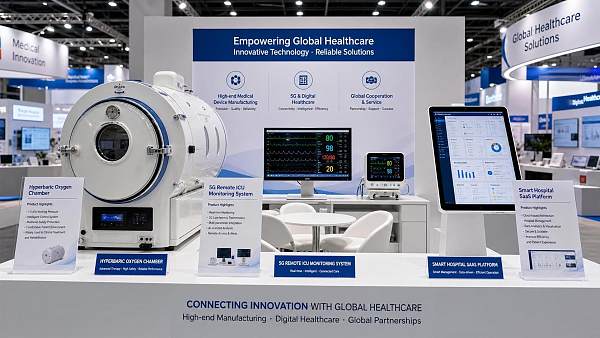
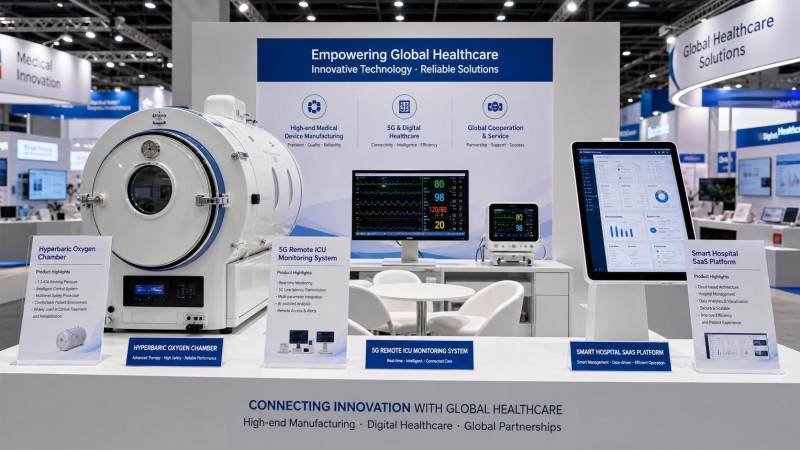
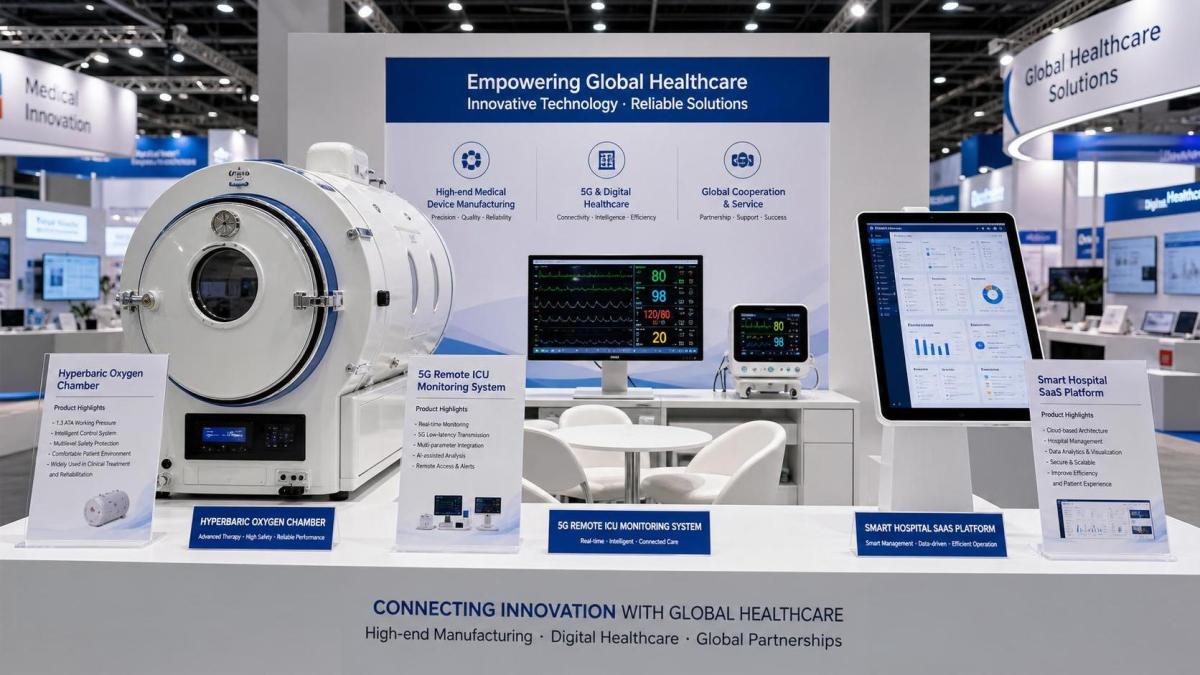
On June 16, 2026, the Langfang international trade fair opened a three-day procurement matchmaking program that puts Medical Hyperbaric Chambers, 5G Tele-ICU Networks, and Smart Hospital Capital & SaaS offerings into direct contact with overseas buyers. From an industry perspective, the more notable signal is not only buyer demand itself, but the use of vertical sessions and pre-matched orders to reduce intermediary layers, which may reshape how suppliers, distributors, exporters, and compliance teams prepare for cross-border procurement, documentation review, and delivery commitments.
What the procurement event confirms
The user-provided event information states that the procurement matchmaking meeting runs from June 16 to June 18, 2026 at the Linkong International Convention and Exhibition Center in Langfang. It attracted more than 700 global buyers, including professional buying groups such as the American Association for Elderly Care, the Russian Medical Equipment Import Alliance, and a procurement delegation from the Ministry of Health of Vietnam, along with buyers from more than ten countries.
The confirmed focus categories are Medical Hyperbaric Chambers, 5G Tele-ICU Networks, and Smart Hospital Capital & SaaS products. The event also uses a “vertical session + pre-matched orders” model and is described as enabling overseas distributors to connect directly with Chinese production capacity without intermediaries.
Why the matching format matters across the chain
For device exporters, the sales path becomes more documentation-driven
Analysis shows that when overseas distributors connect directly with manufacturers through pre-matched orders, exporters may face earlier and more detailed scrutiny of product specifications, qualification files, delivery capability, and after-sales arrangements. This matters especially for Medical Hyperbaric Chambers and 5G Tele-ICU Networks, where technical alignment and compliance review are often tied closely to procurement decisions.
For distributors, intermediary reduction shifts due diligence forward
Observably, a zero-intermediary connection model can shorten communication paths, but it also places more responsibility on overseas distributors to verify whether supplier qualifications, technical documents, and service commitments fit local purchasing or regulatory expectations. The operational impact is likely to appear first in supplier screening, tender preparation, and contract risk review.
For software and smart hospital vendors, procurement may hinge on clearer implementation terms
From an industry perspective, Smart Hospital Capital & SaaS suppliers may need to pay closer attention to how buyers frame procurement scope, deployment boundaries, and service obligations. While the event summary does not provide execution rules, the direct-matching format suggests that commercial discussions may move more quickly into practical review of service content, documentation completeness, and delivery readiness.
For service and support providers, post-sale capability becomes part of market access
What deserves closer attention is that bulk procurement interest can extend pressure beyond the initial order stage. Certification support firms, testing-related service providers, logistics coordinators, and after-sales teams may all be affected if buyers ask for clearer evidence on quality traceability, installation support, maintenance response, or cross-border delivery coordination before placing orders.
What companies should monitor next
Keep compliance files ready for direct buyer review
Analysis shows that suppliers participating in direct procurement matching should be prepared for buyers to request technical documents, qualification materials, test-related records, and product descriptions earlier in the process. The current information does not confirm any specific certification requirement, so this should be treated as a practical preparation point rather than an established rule change.
Watch procurement language and bid document wording
It is more appropriate to understand this event as a signal to monitor how future procurement documents, buyer requirements, and technical specifications are written for these product categories. This is particularly relevant where the same product may face different documentation expectations across overseas channels.
Review delivery promises against real supply capability
Observably, pre-matched orders can compress the timeline between commercial contact and delivery discussion. Companies should therefore check whether production scheduling, export coordination, service support, and quality traceability can support any commitments made during procurement talks.
Track after-sales and accountability terms in cross-border deals
From an industry perspective, direct connections between overseas distributors and Chinese suppliers can make post-sale obligations more visible during negotiation. Firms should pay attention to how warranty scope, maintenance response, fault handling, and responsibility boundaries are discussed, even if no formal execution standard has yet been disclosed in the provided information.
How this should be read at this stage
Analysis shows that this development is better read as an execution signal in trade organization and procurement matching rather than as a fully defined regulatory change. The event highlights a more direct route between overseas demand and Chinese supply, but the specific compliance thresholds, certification interpretations, tender language, and delivery enforcement standards tied to resulting transactions are not provided in the input and therefore still require observation.
What deserves closer attention is whether this matching model leads to more standardized buyer requirements in the targeted categories. Industry participants should continue watching for follow-up signals in procurement documents, qualification checks, and market feedback rather than assuming that a single event has already established a uniform rule framework.
What the event currently signals for the market
At present, the most reasonable reading is that the Langfang event points to a more structured and more direct procurement interface for selected medtech and smart hospital categories. It does not by itself confirm a new formal regulation, but it does suggest that exporters, distributors, and service partners may need to adapt faster to buyer-led scrutiny of documents, qualifications, delivery, and after-sales capacity.
In that sense, the event is more appropriately understood as a practical market and execution signal with potential compliance and trade implications, rather than a completed rule change with settled standards.
Basis of this article
This article is generated from the user-provided news title, event date, and event summary. No specific official source link was provided in the input, so any formal policy wording, regulatory interpretation, certification position, or procurement enforcement detail still needs continued verification.
For this type of event, source categories that usually merit follow-up include official announcements, releases by regulatory bodies, customs or trade authorities, industry association updates, standards organization documents, and reporting by authoritative media. Further observation should focus on policy detail, certification interpretation, tender document changes, industry feedback, and how participating companies implement procurement and delivery requirements in practice.
Recommended News
 Sep 12, 2026What determines the price of a medical hyperbaric chamber?Hyperbaric chamber price depends on pressure capacity, configuration, oxygen systems, safety features, installation, and service. Compare total clinical readiness costs before buying.
 Sep 01, 2026When does chamber depth matter in hyperbaric oxygen therapy systems?Hyperbaric oxygen therapy systems: learn when chamber depth affects protocols, safety, infrastructure, and patient workflow for smarter system selection.
 Aug 14, 2026China Imposes Temporary Export Ban on Helium, Disrupting Medical Cooling Supply ChainsHelium export ban in China threatens medical cooling supply chains, impacting MRI, surgical robots, and tele-ICU systems.
 Jul 30, 2026Hyperbaric Oxygen Therapy Safety: Who Should Avoid Treatment and WhyHyperbaric oxygen therapy safety starts with screening. Learn who should avoid HBOT, key risks, and the red flags to check before booking treatment.
 Jul 15, 2026How to Compare a Hyperbaric Chamber Manufacturer for Clinical UseHyperbaric chamber manufacturer comparison guide for clinical buyers: evaluate safety, compliance, performance, service, and total cost to choose a reliable long-term partner.
 Jun 27, 2026EU MDR Annex XVI Brings Hyperbaric Chambers Under Class IIbEU MDR Annex XVI now places hyperbaric chambers under Class IIb from July 1, 2026. See how this rule affects certification, EU imports, inventory planning, and compliance strategy.
 Jun 22, 2026How to Compare a Hyperbaric Therapy System Manufacturer in 2026Hyperbaric therapy system manufacturer comparison in 2026: learn how to assess compliance, safety, lifecycle cost, service support, and export readiness before choosing a supplier.
 Jun 16, 2026Langfang Fair Opens with Targeted MedTech MatchmakingLangfang Fair opens with targeted MedTech matchmaking, connecting buyers to Medical Hyperbaric Chambers, 5G Tele-ICU Networks, and Smart Hospital SaaS. See what it means for exporters.
 May 28, 2026Hyperbaric chambers pricing varies widely for reasons buyers missHyperbaric chambers pricing varies for more than size or pressure. Learn the hidden cost drivers, compliance risks, and smart buying tips to compare systems with confidence.