Search News
Industry Portal
Popular Tags
Operating Room Scheduling Software: Features That Reduce Delays
Author
Time
Click Count
Operating room scheduling software has moved from a back-office tool to a strategic operational system. Hospitals now depend on it to reduce delays, balance room capacity, and coordinate surgeons, anesthesia teams, nursing staff, equipment, and patient flow with greater precision.
That shift matters because perioperative services sit at the intersection of clinical outcomes, revenue performance, digital infrastructure, and compliance. In a market shaped by surgical robotics, connected hospital systems, medical AI, and data security demands, scheduling decisions can no longer rely on static spreadsheets or fragmented calls.
For organizations following digital hospital trends through platforms such as DMRS, operating room scheduling software is best understood as part of a wider orchestration layer. It links workflow planning, system interoperability, utilization analytics, and patient safety into one operational discipline.
Why delay reduction has become a priority
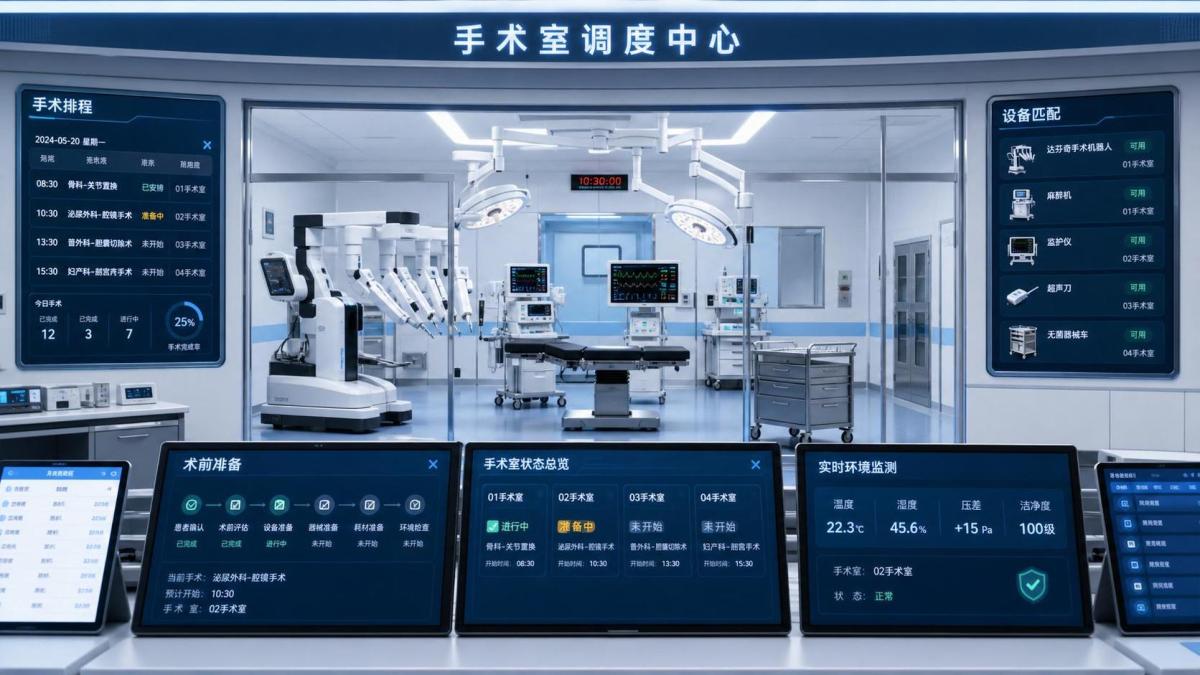
Delays in the operating room rarely come from one cause. They usually emerge from weak coordination across booking, staffing, preparation, transport, sterilization, documentation, and post-anesthesia bed availability.
A late first case can push the entire daily list off track. A missing implant, unavailable robot, or incomplete consent can create a chain reaction that affects multiple teams and increases overtime costs.
This is why operating room scheduling software attracts attention beyond the perioperative department. It influences capacity planning, finance, IT integration, procurement decisions, and the overall pace of hospital digital transformation.
The issue is especially relevant in environments using robotic-assisted surgery or advanced imaging workflows. These cases often require tighter timing, room setup discipline, and equipment readiness than conventional procedures.
What operating room scheduling software really does
At its core, operating room scheduling software manages the sequence, timing, and resource alignment of surgical cases. The best platforms do more than place cases on a calendar.
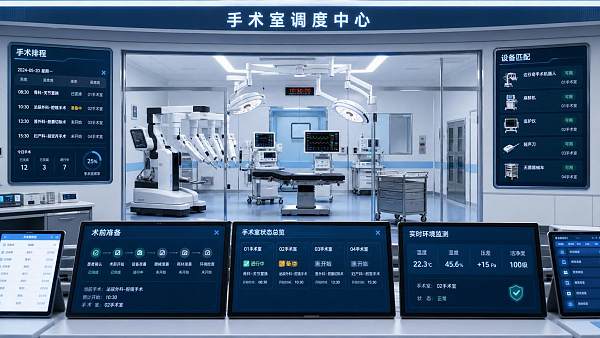
They create a live operational view of rooms, teams, equipment, case duration assumptions, patient readiness, turnover time, and downstream constraints. In practical terms, the software becomes a decision engine rather than a booking ledger.
This matters in digitally mature hospitals where HIS, PACS, EHR, sterilization tracking, and device management systems already generate useful data. Without a scheduling layer that connects these signals, valuable information remains isolated.
The most useful features are coordination features
The strongest systems reduce friction between departments. They help teams see whether a case is truly ready, not just theoretically booked.
- Real-time room and case status dashboards
- Automated alerts for missing documentation or approvals
- Resource matching for staff, devices, and specialty equipment
- Predictive case duration modeling based on historical data
- Turnover time tracking with variance analysis
- Waitlist and block release logic for unused capacity
When these features work together, operating room scheduling software helps prevent avoidable idle time and reduces the need for last-minute manual escalation.
Features that most directly reduce delays
Not every feature has equal operational value. Some functions look impressive in demonstrations but do little to improve on-time starts or turnover stability.
The features below tend to make a measurable difference when hospitals are trying to shorten delays.
A practical evaluation should focus on whether the platform changes daily behavior. If users still depend on parallel phone calls and whiteboards, the software may not be solving the real delay problem.
Where this software creates business value
The immediate value is operational, but the downstream effects are broader. Better scheduling improves room utilization, protects surgical revenue, reduces staff fatigue, and supports more reliable patient communication.
It also strengthens capital planning. If utilization data shows chronic bottlenecks in one specialty but not another, expansion choices become more defensible. The same logic applies to robotic platforms, imaging support, and sterile processing capacity.
From a digital infrastructure perspective, operating room scheduling software can become a high-value integration point. DMRS often highlights how healthcare technologies create more value when they are connected rather than deployed as isolated applications.
That principle is especially true here. Scheduling quality improves when patient records, imaging availability, device readiness, and perioperative milestones are visible in the same operational workflow.
High-impact use cases
- Multi-room surgical centers balancing elective and urgent cases
- Hospitals adding robotic-assisted surgery to existing OR capacity
- Facilities managing shared imaging, anesthesia, or sterilization constraints
- Networks standardizing scheduling rules across multiple sites
- Organizations building dashboards for utilization, delay causes, and block performance
What to examine before selecting a platform
Selection should start with workflow reality, not vendor claims. A strong interface matters, but the bigger question is whether the system fits how cases are booked, released, revised, and escalated.
Interoperability is usually near the top of the list. Operating room scheduling software needs clean connections with EHR or HIS platforms, imaging systems, staff scheduling tools, and sometimes inventory or device tracking systems.
Security and compliance deserve equal attention. In connected hospital environments, access control, audit trails, data protection, and role-based permissions are not side topics. They are part of operational reliability.
The analytics layer also needs careful review. Dashboards should explain why delays happen, not just display that they happened. Useful reporting distinguishes between room turnover delays, patient preparation issues, staffing gaps, and equipment conflicts.
A grounded evaluation checklist
- Can the system model specialty-specific case durations?
- Does it support robotic and equipment-dependent scheduling constraints?
- Can users see readiness issues before the day of surgery?
- Are block release rules transparent and adjustable?
- Do reports identify repeat causes of first-case delays?
- Is adoption realistic for perioperative, IT, and administrative teams?
Implementation is often the deciding factor
Many hospitals do not struggle because they lack software. They struggle because implementation stops at installation. Delay reduction requires new governance around block policy, escalation paths, data ownership, and accountability for schedule changes.
In practice, operating room scheduling software works best when deployment includes baseline measurement. That means documenting first-case start performance, turnover variance, cancellation causes, and block utilization before the rollout.
Once the platform is live, those same measures should be reviewed against specific operational targets. Without that step, it becomes difficult to separate software value from normal fluctuation.
A phased rollout usually works better than a full switch on day one. Starting with one service line or one site makes it easier to refine rules, integrations, and user training before expansion.
A useful next step for decision making
The best way to assess operating room scheduling software is to map actual delay sources before comparing vendors. A hospital dealing mainly with block underuse needs a different solution focus than one facing robotic equipment conflicts or weak pre-op readiness control.
It also helps to review the software in the wider context of digital hospital infrastructure, which is a recurring theme across DMRS coverage. Scheduling performance improves most when data quality, workflow design, and connected clinical systems mature together.
A grounded shortlist should therefore combine feature review, integration feasibility, operational metrics, and implementation discipline. That approach makes operating room scheduling software easier to judge as a long-term operational platform, not just another IT purchase.
From there, the next move is practical: define the delay categories that matter most, test how candidate systems respond to those scenarios, and build a selection framework around measurable workflow improvement.
Recommended News
 Jul 27, 2026Intelligent Operating Room Data Integration: Key Interoperability Risks and FixesIntelligent operating room data integration: uncover interoperability risks, patient ID issues, latency, and security gaps—plus practical fixes for safer, scalable OR deployments.
 Jul 20, 2026Perioperative Technology: Key AIMS Features That Reduce OR Workflow RiskPerioperative technology is reshaping OR safety. Discover the key AIMS features that reduce workflow risk, improve data accuracy, support compliance, and strengthen clinical decisions.
 Jul 03, 2026Medical Data Analytics for Hospitals: Which Metrics Matter First?Medical data analytics for hospitals starts with the right KPIs. Discover which metrics improve patient flow, care quality, diagnostic speed, and financial performance first.
 Jun 19, 2026Operating Room Scheduling Software: Features That Reduce DelaysOperating room scheduling software helps hospitals reduce delays with real-time coordination, predictive scheduling, and smarter resource use. See which features improve OR efficiency.
 Jun 18, 2026How a Medical Data Analytics Platform Reduces Reporting DelaysMedical data analytics platform solutions help healthcare teams reduce reporting delays, unify fragmented data, improve compliance visibility, and turn critical insights into faster action.
 Jun 11, 2026Operating Room Integration: Common Workflow Gaps That Delay CasesOperating room integration often fails at the workflow level. Discover the most common gaps that delay cases and how hospitals can fix them for faster, safer OR performance.
 May 28, 2026Surgical simulation is improving fast, but is realism good enough?Surgical simulation is advancing fast, but is realism enough for safer robotic workflows, AI validation, and complex case rehearsal? Explore the key gaps and future potential.